ETIOPATHOGENESIS OF SERIAL VIOLENCE: RETROSPECTIVE STUDY ON A SAMPLE OF 20 SUBJECTS.
Correlations between complex post-traumatic stress disorder (C-PTSD), ANS dysregulation, and self-care strategies (STAS). Part one
Authors: Tiziana Calzone & Massimo Lattanzi
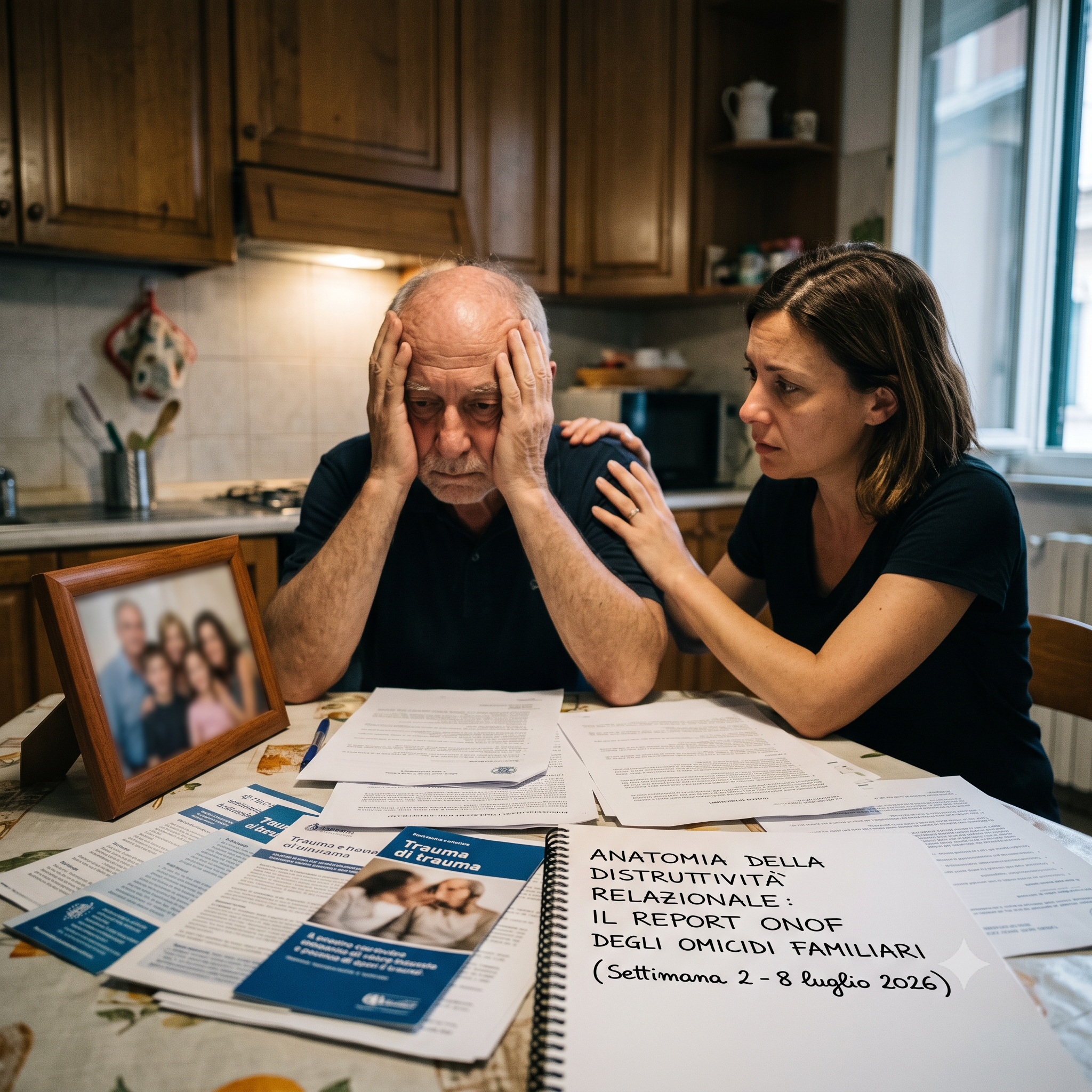
Reference entities: AIPC (Italian Association of Psychology and Criminology), CIPR (Italian Center for Relational Psychotraumatology), ONOF (National Observatory on Family Homicides).
Methodology and sources
This study is based on the qualitative and retrospective analysis of criminal biographies and forensic data contained in the volume Serial Killers: The 20 most ruthless criminals of all time by Mason Hallow, taken as the primary source of the investigation. The applied methodology involves the clinical re-reading of historical narratives through the theoretical framework of Relational Psychotraumatology and the research protocols of AIPC and CIPR. Specifically, the profiles were subjected to a psychobiological evaluation aimed at identifying the etiological markers of Complex Post-Traumatic Stress Disorder (C-PTSD) and classifying the methods of managing autonomic dysregulation through the application of the S.T.A.S. Scale (Toxic Substances and Self-Care of Suffering). This allowed for the correlation of past traumatic experiences with subsequent conduct of serial violence and substance abuse.
Abstract
This study analyzes the criminal biographies contained in Mason Hallow's volume Serial Killers through the lens of Relational Psychotraumatology. The investigation focuses on a sample of 20 serial killers, examining the incidence of Post-Traumatic Stress Disorder (PTSD) and Complex Post-Traumatic Stress Disorder (C-PTSD) as primary etiological factors of violence. Through the application of the S.T.A.S. Scale, the mode by which these subjects attempt to regulate Autonomic Nervous System (ANS) dysregulation is profiled. The results highlight an almost total prevalence (95%) of early cumulative traumas and confirm that 100% of the sample utilizes maladaptive strategies for the self-care of traumatic pain.
1. Introduction: The paradigm of relational trauma
According to the AIPC and CIPR theoretical model, hetero-directed violence is not the expression of an innate "evil," but the behavioral outcome of a severe neurobiological alteration. Early and prolonged exposure to failing or abusive caregiving contexts prevents the correct maturation of the Central Nervous System (CNS) and affective regulation systems. The subject, unable to modulate the arousal deriving from traumatic memories, develops pathological survival strategies: the violent act or substance abuse becomes a desperate attempt at "self-care" to re-establish a precarious homeostasis.
2. Case study analysis: Psychotraumatological profiles and violent activity
1. Luis Alfredo Garavito
- Traumatic core: Exposed to chronic paternal domestic violence, maternal negligence, and sexual abuse in adolescence.
- Homicidal/Violent activity: Known as "The Beast." Confessed to the murder of over 190 children and adolescents (predominantly males between 8 and 16 years old). The modus operandi involved luring through benevolent deception, followed by binding, prolonged torture, sexual violence, and decapitation or throat-slashing.
2. Harold Shipman
- Traumatic core: Loss trauma in developmental age (mother's death from cancer), with fixation on morphine as a tool for pain/power control.
- Homicidal/Violent activity: Nicknamed "Dr. Death." A General Practitioner responsible for an estimated 250 murders. Victims were predominantly elderly women in good health, killed via lethal injections of diamorphine during home visits, often to falsify their wills.
3. Pedro Alonso López
- Traumatic core: Abandonment trauma (expelled from home at 8 years old) and sexual polytrauma suffered on the streets and in institutions.
- Homicidal/Violent activity: The "Monster of the Andes." Killed over 300 young girls in Colombia, Peru, and Ecuador. Victims were lured in markets or isolated zones, then raped and strangled.
4. Ted Bundy
- Traumatic core: Identity and attachment trauma (late discovery of biological mother, violent grandfather).
- Homicidal/Violent activity: Killed at least 30 young women. Used his charm or feigned disability (arm in a cast) to lure victims into his car. Killed them via beating or strangulation, practicing acts of necrophilia on the corpses.
5. Andrei Chikatilo
- Traumatic core: Historical trauma (famine), transgenerational trauma (tales of cannibalism), and chronic social humiliations.
- Homicidal/Violent activity: The "Butcher of Rostov." Killed at least 52 women and children. Murders were characterized by extreme sexual violence, evisceration, genital mutilation, and acts of cannibalism, often committed in wooded areas near train stations.
6. Gary Ridgway
- Traumatic core: Maternal relational trauma (dominant/humiliating mother), sexualization of hatred, and prolonged enuresis.
- Homicidal/Violent activity: The "Green River Killer." Responsible for at least 49 murders (likely many more) of women, predominantly prostitutes or runaways. Strangled them (often manually or with ligatures) and returned to burial sites to engage in sexual intercourse with the corpses.
7. John Wayne Gacy
- Traumatic core: Systematic paternal physical violence and childhood head trauma with consequent blackouts.
- Homicidal/Violent activity: The "Killer Clown." Tortured and killed 33 young men and adolescents. Lured victims with promises of work or sex, handcuffed them with a magic trick, then strangled them (garrote) and buried them in the crawl space under his house.
8. Jeffrey Dahmer
- Traumatic core: Trauma of emotional abandonment (divorce, loneliness), early surgery experienced as bodily invasion.
- Homicidal/Violent activity: The "Milwaukee Cannibal." Killed 17 males (adults and boys). Modus operandi included luring, administration of sleeping pills, strangulation, dismemberment, necrophilia, cannibalism, and attempts to create "zombies" via acid injections into the brains of still-living victims.
9. Richard Ramirez
- Traumatic core: Exposure to paternal violence and vicarious traumatization (veteran cousin showing war photos and committing uxoricide in his presence).
- Homicidal/Violent activity: The "Night Stalker." A "disorganized" serial killer who entered homes at night. Committed murders, rapes, and assaults on men, women, and children without a fixed victim profile. Used firearms, knives, and blunt objects, often leaving satanic symbols at the scene.
10. Yang Xinhai
- Traumatic core: Social trauma from extreme poverty and relational rejection experienced as annihilation of the Self.
- Homicidal/Violent activity: The "Monster Killer." Killed 67 people in China. Entered homes at night exterminating entire families with axes, hammers, or spades. Often raped women who survived the initial attack or the corpses.
11. Samuel Little
- Traumatic core: Early maternal abandonment (prostitute mother) and institutionalization, developing an objectifying view of the feminine.
- Homicidal/Violent activity: Considered the most prolific serial killer in US history (confessions for 93 murders). Targeted marginalized women (prostitutes, drug addicts). Stunned them with powerful punches (was a former boxer) and strangled them, often making deaths ambiguous for overdose or natural causes.
12. Mikhail Popkov
- Traumatic core: Relational trauma linked to negative maternal figures (reported) and paranoid perception of female betrayal.
- Homicidal/Violent activity: The "Werewolf." Former Russian policeman, killed over 80 women. Offered night rides in police cars to women (often drunk), taking them to the woods to rape and kill them with axes, screwdrivers, or knives.
13. Niels Högel
- Traumatic core: Pathological narcissism deriving from inner emptiness and dysregulated need for external validation (creating crises to solve them).
- Homicidal/Violent activity: German nurse. Injected cardiodepressant drugs into patients to induce cardiac arrests and then attempt (often failing) heroic resuscitation maneuvers in front of colleagues. Responsible for approximately 85-100 murders.
14. Miyuki Ishikawa
- Traumatic core: Contextual trauma (war, extreme poverty) leading to desensitization toward infant death.
- Homicidal/Violent activity: Japanese midwife ("Oni-Sanba"). Responsible for the death of over 100 newborns in the 1940s. Left children of poor families who could not afford maintenance to die of hardship and neglect, justifying the act as an economic necessity.
15. Javed Iqbal
- Traumatic core: Abuse of power trauma (torture and humiliation by police), triggering a vindictive repetition compulsion.
- Homicidal/Violent activity: Killed 100 street boys in Pakistan. Lured them home, drugged them, strangled them with a chain, dismembered the bodies, and dissolved them in vats of hydrochloric acid to eliminate evidence.
16. Daniel Camargo Barbosa
- Traumatic core: Childhood humiliation trauma (stepmother dressed him as a woman), transformed into gender hatred.
- Homicidal/Violent activity: Killed approximately 150 virgin girls and women in Colombia and Ecuador. Pretended to be an authoritarian or religious figure (pastor, professor) to lure victims into wooded areas, where he raped and killed them (often by strangulation), but not before humiliating them.
17. Yvan Keller
- Traumatic Core: Neglect trauma in a context of poverty and family chaos, with early deviance.
- Homicidal/Violent activity: The "Pillow Killer." Responsible for the death of dozens of elderly women (estimated between 23 and 150) in France and Switzerland. Entered homes to steal and suffocated victims in their sleep with a pillow, making the death appear natural.
18. Aleksandr Pichushkin
- Traumatic core: Childhood head trauma (swing accident) and trauma from loss of attachment figure (grandfather), with consequent isolation.
- Homicidal/Violent activity: The "Chessboard Killer." Wanted to kill 64 people (like chess squares). Killed at least 48 people, initially elderly men/homeless (substitute grandfather figures?) and then women, in Moscow's Bitsevsky Park. Struck victims in the head with a hammer and stuck a vodka bottle into the open skull.
19. Jack the Ripper
- Traumatic Core: Profile unknown. Behavioral analysis (overkill) suggests severe emotional dysregulation compatible with deep relational traumas.
- Homicidal/Violent activity: Never identified. Killed and mutilated at least 5 women (prostitutes) in the Whitechapel district of London (1888). Modus operandi characterized by deep throat-slashing, facial and abdominal mutilations, and removal of internal organs with almost surgical precision.
20. Larry Eyler
- Traumatic Core: Trauma from identity conflict and family abandonment, managed through substance abuse.
- Homicidal/Violent activity: The "Interstate Killer." Killed about 20 young men. Lured hitchhikers or gay bar patrons, drugged or bound them, then stabbed them repeatedly (overkill) and dismembered them, abandoning remains in different counties to confuse investigations.
Correlation: From trauma to homicidal ritual
1. Luis Alfredo Garavito
- Dynamic: Identification with the aggressor / Role reversal.
- Analysis: Having suffered abuse and torture, Garavito assumes the role of the one holding total power (becoming the father/aggressor), reducing victims to the role of the "helpless child" he once was. Prolonged torture serves to discharge the rage accumulated from suffering endured, "transferring" it onto another body.
2. Harold Shipman
- Dynamic: Omnipotent control over death (God Complex).
- Analysis: The trauma of losing his mother (experienced as a failure of control) is compensated by deciding exactly when and how patients die. Morphine, which soothed his mother's pain but marked her end, becomes the scepter of his power: he administers eternal "peace," defeating the unpredictability of natural death.
3. Pedro Alonso López
- Dynamic: Compensatory territorial predation.
- Analysis: Expelled from home and without safe "boundaries" (the street), López transforms vagrancy into hunting. The sexual abuse suffered becomes abuse enacted: strangulation is the definitive act of dominion over young women, reclaiming through violence the control that institutions and the street had stolen from him.
4. Ted Bundy
- Dynamic: Possession of the inanimate object.
- Analysis: Attachment trauma and maternal lies create total distrust toward the "living" and autonomous woman (who can lie or abandon). Necrophilia is the pathological solution: the corpse is the perfect partner because it does not judge, does not lie, and, above all, cannot leave. He kills to make the woman "his" forever.
5. Andrei Chikatilo
- Dynamic: Incorporation and sexualization of violence.
- Analysis: Sexual impotence and the memory of famine (atavistic hunger) merge. Since he cannot penetrate sexually (male/social failure), he penetrates with the knife. Cannibalism and evisceration are primitive attempts to "assimilate" the victim's strength and fill the inner void.
6. Gary Ridgway
- Dynamic: Punishment of the maternal figure / Degradation.
- Analysis: Hatred toward the dominant mother is displaced onto prostitutes (women he considers "disposable"). Strangling them is a way to "silence" the female figure. Returning to the corpses to have sex indicates that the only safe relationship for him is with a woman who can no longer humiliate him.
7. John Wayne Gacy
- Dynamic: Containment of the "Bad Self."
- Analysis: His father defined him as "effeminate" and useless. Gacy builds a façade of success (the model citizen), but buries bodies under the foundations of his house. It is an architectural metaphor for his psyche: horror and repressed homosexuality are hidden in the foundations, while above everything appears normal. The handcuff trick serves to render the other helpless, exactly how he felt with his father.
8. Jeffrey Dahmer
- Dynamic: Attempt at permanent symbiosis.
- Analysis: Terror of abandonment is the engine. He does not kill out of hatred, but so "they don't leave." Dismemberment and preservation of body parts serve to keep the victims always with him. Lobotomy attempts (creating zombies) were aimed at creating a submissive and non-judgmental partner who would never leave him alone.
9. Richard Ramirez
- Dynamic: Introjected and externalized chaos.
- Analysis: His cousin showed him that killing is power and violence against women is normal. Ramirez has no plan because his trauma is pure chaos. Invading homes at night (the safe place par excellence) replicates the violation of domestic safety he experienced in his violent childhood.
10. Yang Xinhai
- Dynamic: Annihilation of the world that rejected him.
- Analysis: The trauma of total social rejection leads him to want to erase the "cell" of society: the family. The use of agricultural or construction tools (hammers, shovels) reflects his condition as an outcast; he destroys the domestic happiness that is precluded to him with explosive rage.
11. Samuel Little
- Dynamic: Silencing the "impure" woman.
- Analysis: His prostitute mother abandons him; he kills women on the margins (prostitutes, drug addicts). Strangulation is an intimate but total act of control: he takes away breath, "switches off" life with his own hands, perhaps reliving and controlling the moment his mother "let him go."
12. Mikhail Popkov
- Dynamic: Paranoid moral purification.
- Analysis: Betrayal (real or imagined) and the negative maternal figure lead him to split into a "vigilante." Killing drunken women is a "clean-up": he punishes the "free" and "immoral" woman who, in his paranoid mind, threatens his virility and honor.
13. Niels Högel
- Dynamic: Fabrication of heroism.
- Analysis: Narcissistic emptiness requires constant admiration. Creating cardiac arrest serves not to kill, but to have the opportunity to save. Death is a "side effect" of his desperate need to be seen as "the good one," filling his professional and existential insecurity.
14. Miyuki Ishikawa
- Dynamic: Rationalization of death.
- Analysis: The trauma of extreme poverty and war desensitizes. She does not "kill" (in her mind), but "solves an economic problem." Lethal neglect is the direct translation of a world where life is worth less than economic survival.
15. Javed Iqbal
- Dynamic: Specular revenge (Law of Retaliation).
- Analysis: The correlation is literal. The police chained and tortured him; he chains and tortures. Acid serves to erase the victims' identity, just as the abuse of power erased his human dignity. It is a restitution of the evil suffered to the whole world.
16. Daniel Camargo Barbosa
- Dynamic: Sadistic virile reaffirmation.
- Analysis: Being dressed as a woman by his stepmother was a humiliating symbolic castration. As an adult, he reverses the script: he attacks virgin women (symbol of purity/untouchability) to destroy them and brutally affirm a predatory masculinity he feels is threatened.
17. Yvan Keller
- Dynamic: Projective euthanasia.
- Analysis: Raised in chaos and neglect, perhaps he seeks peace. Suffocating elderly women with a pillow is a "sweet," silent death. It could represent the unconscious desire to silence the chaos of his own life, bringing eternal sleep to parental figures.
18. Aleksandr Pichushkin
- Dynamic: Structuring the void.
- Analysis: Head trauma brings impulsivity, the grandfather's loss brings loneliness. The chessboard is an obsessive attempt to give order (rules, squares, numbers) to the chaos of his damaged mind and death itself. Sticking objects into victims' skulls is a concrete callback to his own head trauma.
19. Jack the Ripper
- Dynamic: Attack on generativity (Hypothesis).
- Analysis: Overkill and removal of the uterus suggest deep hatred toward the woman as "mother" or source of life. The ritual is a visceral inspection, an attempt to destroy the feminine essence, compatible with very severe maternal relational trauma (prostitute or abandoning mother).
20. Larry Eyler
- Dynamic: Explosion of identity conflict.
- Analysis: Overkill (excessive stabbing) signals that the murder is not instrumental but expressive. He discharges onto the victim's body (often attractive males) the hatred toward himself and his own conflicting homosexual desires. He destroys what he desires because he cannot integrate it into his identity.
Purpose of research and interpretative limits
It is fundamental to make explicit the epistemological and ethical perimeter within which this study moves. The primary objective of this investigation is not statistical generalization, nor is it legal or moral exculpation of the offenders. On the contrary, the intent is exclusively to bring out the "hidden data": that portion of clinical truth often buried under the media narrative of the "monster."
As highlighted by the research activities of ONOF (National Observatory on Family Homicides) regarding perpetrators of domestic crimes, a constant invariable emerges in the field of serial homicide as well: the presence of an unprocessed traumatic past and dysfunctional attempts at self-care (STAS).
Whether it is a father killing within the family or a serial predator like those analyzed in Hallow's text, the etiological matrix often lies in the same neurobiological and affective dysregulation deriving from C-PTSD.
Recognizing the wounds of a serial killer's childhood, or mapping the substances used to anesthetize their pain, is not equivalent to providing an excuse for the violence enacted. Explaining does not mean justifying. Rather, it means equipping criminology and clinical practice with more refined predictive tools. Only by illuminating the shadow zones of the perpetrator's personal history—traumas, negligence, pathological survival strategies—is it possible to understand the mechanism that transforms suffering endured into suffering inflicted, shifting the focus from posthumous indignation to early prevention.
Second part coming soon
The continuation of our retrospective study: "Etiopathogenesis of serial violence" will be online the day after tomorrow. After the introduction in Part One, we will deepen the crucial correlations between C-PTSD, Autonomic Nervous System (ANS) dysregulation, and self-care strategies (STAS). A fundamental step to understanding the psychophysiological roots of violence.
See you the day after tomorrow. Don't miss it!
Bibliographic references:
Hallow, M. Serial Killers: The 20 most ruthless criminals of all time.
AIPC Editore Publications: Trauma, Dissociation and Violence.
AIPC/CIPR Scientific Articles on the STAS Scale and the Emotional Dysregulation Model.