FCP – AIPC Webinar Summary, December 12, 2025
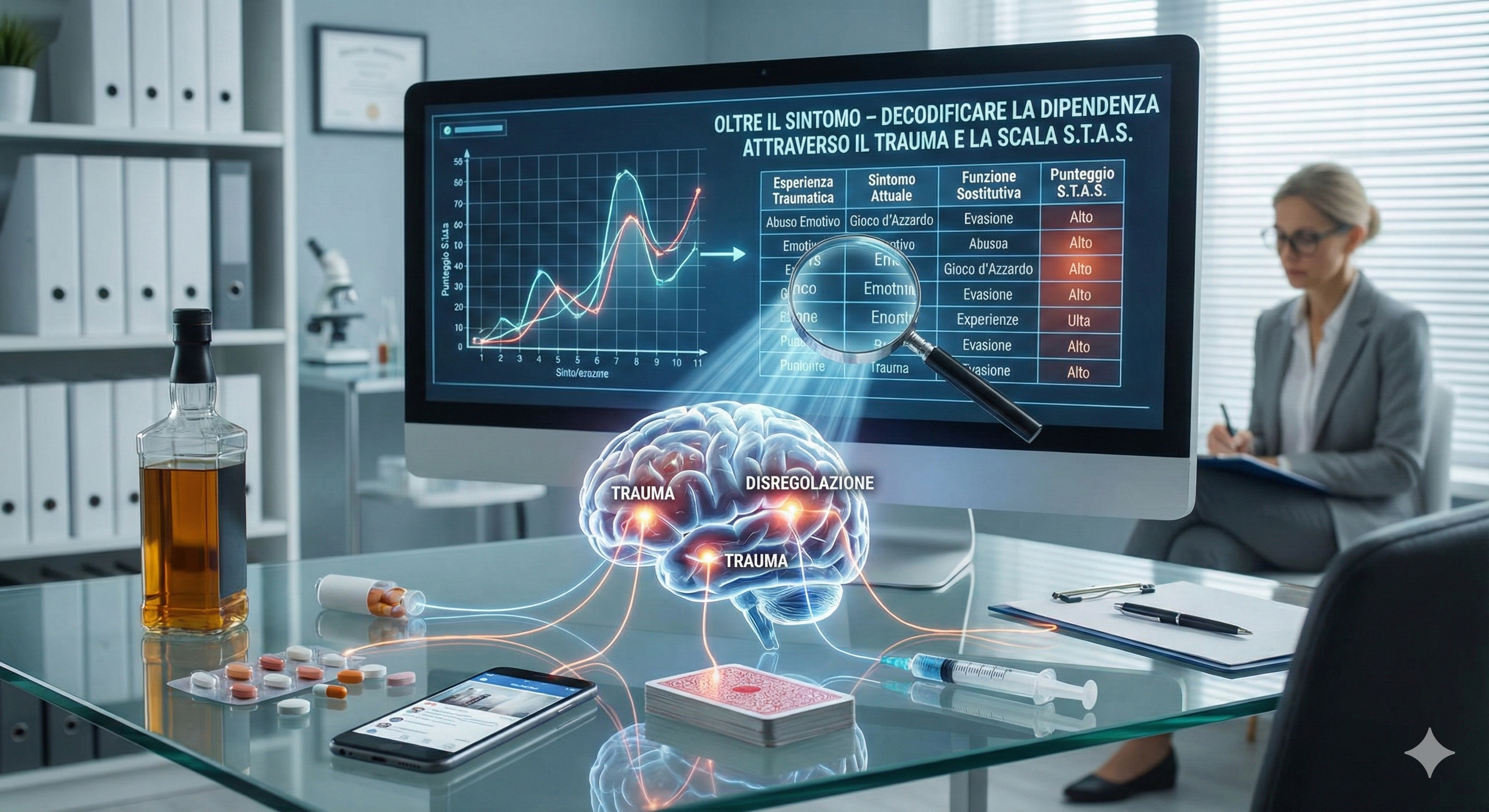
Beyond the symptom – Decoding addiction through trauma and the S.T.A.S. scale
On December 12, 2025, within the framework of FCP - Formazione Continua in Psicologia (Continuing Education in Psychology), an important online seminar was held, attended by approximately 200 connected professionals.
The event was curated and conducted by Dr. Massimo Lattanzi, psychologist and psychotherapist at A.I.P.C. (Italian Association of Psychology and Criminology), an expert in the treatment of trauma and violent dynamics. A special thanks was extended to Dr. Tiziana Calzone, a key figure in the organization and promotion of the association's activities, and to the Psychology trainees, whose presence and support are fundamental to research and training activities.
The work presented is the result of synergy between three entities: AIPC (research and training), CIPR (Italian Center for Relational Psychotraumatology - the clinical arm), and ONOF (National Observatory on Family Homicides).
The core of the intervention: A paradigm shift
The lecture, titled "Beyond the Symptom: Decoding Addiction through Trauma and the S.T.A.S. Scale", proposed a reversal of the clinical perspective on addictions. Traditional approaches focus on the substance (what and how much is consumed), aiming for abstinence. The new paradigm introduced by Dr. Lattanzi shifts the focus to the "why" : addiction is not seen as a vice, but as a desperate and dysfunctional attempt at self-care. The substance becomes a "drug" unconsciously chosen to treat specific traumatic pain.
Clinical integration: The difference between PTSD and C-PTSD
To understand the choice of substance, it was fundamental to distinguish between two "traumatic terrains," integrating the presentation with an in-depth look at lived experiences:
1. PTSD (Post-Traumatic Stress Disorder) - Fear
- Origin: Single or circumscribed event (accidents, assaults).
- Lived Experience: Fear and hyperarousal dominate. It is not a memory, but a visceral "current terror" linked to survival. The subject feels the threat is happening "here and now," with an extreme bodily alarm reaction (tachycardia, hypervigilance).
- Goal of the Substance: Sedative function to "flip the switch" on the threat.
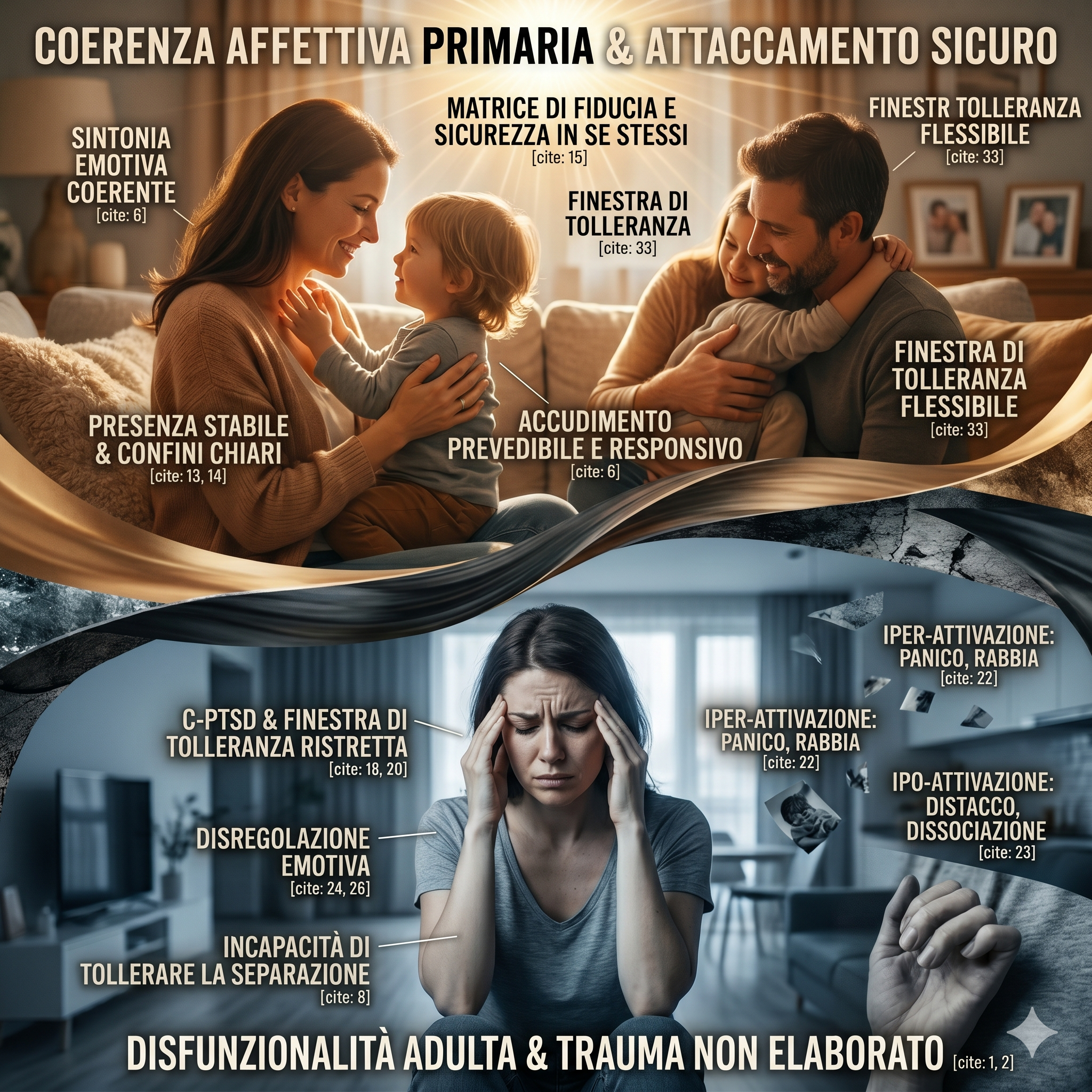
2. C-PTSD (Complex PTSD) - Shame and emptiness
- Origin: Relational and developmental trauma (neglect, prolonged abuse).
- Lived experience: Identity void and toxic shame dominate. The damage is structural: it does not concern what the person did, but who the person is ("I am the bad thing"). It is a profound sensation of "defectiveness" and unlovableness, deriving from the failure of the CARE system.
- Goal of the substance: compensatory function to fill the void or restructure a fragmented identity.
For those wishing to delve deeper: For those wishing to delve deeper into the details of the research cited by Dr. Lattanzi, including specific sample analysis and clinical correlations, the full article is available: Etiopathogenesis of serial violence: retrospective study on a sample of 20 subjects. Correlations between complex post-traumatic stress disorder (C-PTSD), ANS dysregulation and self-care strategies (STAS). Part One. Link to the article:
The 6 profiles of the S.T.A.S. scale (Scale of Substitutive Self-Care Trajectories)
From the intersection of symptom and trauma, six archetypal profiles emerge:
- The distancer (Cannabis/Derivatives): Linked to recent PTSD. Uses the substance to sedate dream activity (nightmares) and create a barrier ("cocooning") between the self and the world.
- The emotional orphan (Heroin/Opioids): Linked to C-PTSD from neglect. The substance offers affective compensation, biochemically mimicking the human warmth never received. The drug replaces the partner.
- The defensive performer (Cocaine/Stimulants): Linked to C-PTSD from humiliation. The substance has a narcissistic compensatory function, constructing a grandiose self to combat toxic shame and the voice of the devaluing parent.
- The astronaut (Dissociatives/Ketamine): Linked to severe C-PTSD (physical abuse/torture). The function is dissociative: it allows one to "exit the body" because inhabiting it is intolerable.
- The panic controller (Benzodiazepines): Linked to PTSD from threat to life/medical trauma. Uses drugs as a "chemical straitjacket" to prevent loss of control, causing total emotional flattening.
- The chaotic regulator (Alcohol): A "bridge" profile for mixed clinical pictures. Alcohol disinhibits and then anesthetizes; it unleashes repressed rage ("Mr. Hyde"), creating relational cycles of abuse and remorse.
Conclusions
The therapeutic goal is not to demonize the substance, but to validate the patient's intent to care for themselves ("I understand you are trying not to suffer") and then work on the original wound. Only by healing the trauma does the "drug" become superfluous.
References and contacts
As mentioned during the event, for clinical insights, therapeutic paths at CIPR (Pescara and Rome), or AIPC training and supervision activities:
Email AIPC, CIPR: aipcitalia@gmail.com
Website: www.associazioneitalianadipsicologiaecriminologia.it
Phone/WhatsApp: 3924401930