Avatar 3 and ontological hybridism: The "unacceptable genetic sum" from the psychotraumatological perspective of Lattanzi and Calzone
The narrative landscape of Avatar 3 emerges as a powerful and ruthless manifesto of relational psychotraumatology. Through the clinical lens developed by Massimo Lattanzi and Tiziana Calzone, the figure of the "hybrid" child—a creature suspended between Na’vi essence and Terrestrial components—ceases to be a mere biological plot device and transforms into the living representation of an unacceptable traumatic synthesis.
1. Offspring as an "epigenetic parasite": The mirror of the invader
Within a devastated family system, the hybrid child is not perceived as a gift, but as an "epigenetic parasite." For a mother like Neytiri, whose world has been upended by grief and wartime hatred, the sight of her offspring functions as an intolerable mirror:
- The blood conflict: Accepting the child's human component means, at an unconscious and visceral level, welcoming the trauma of the invader and the logic of the aggressor into one's own lineage.
- Ontological shame and pollution: This dual nature is experienced by the clan as biological and spiritual "pollution." The child ends up introjecting a shame that is not about what they do, but what they are: their very essence becomes a fault.
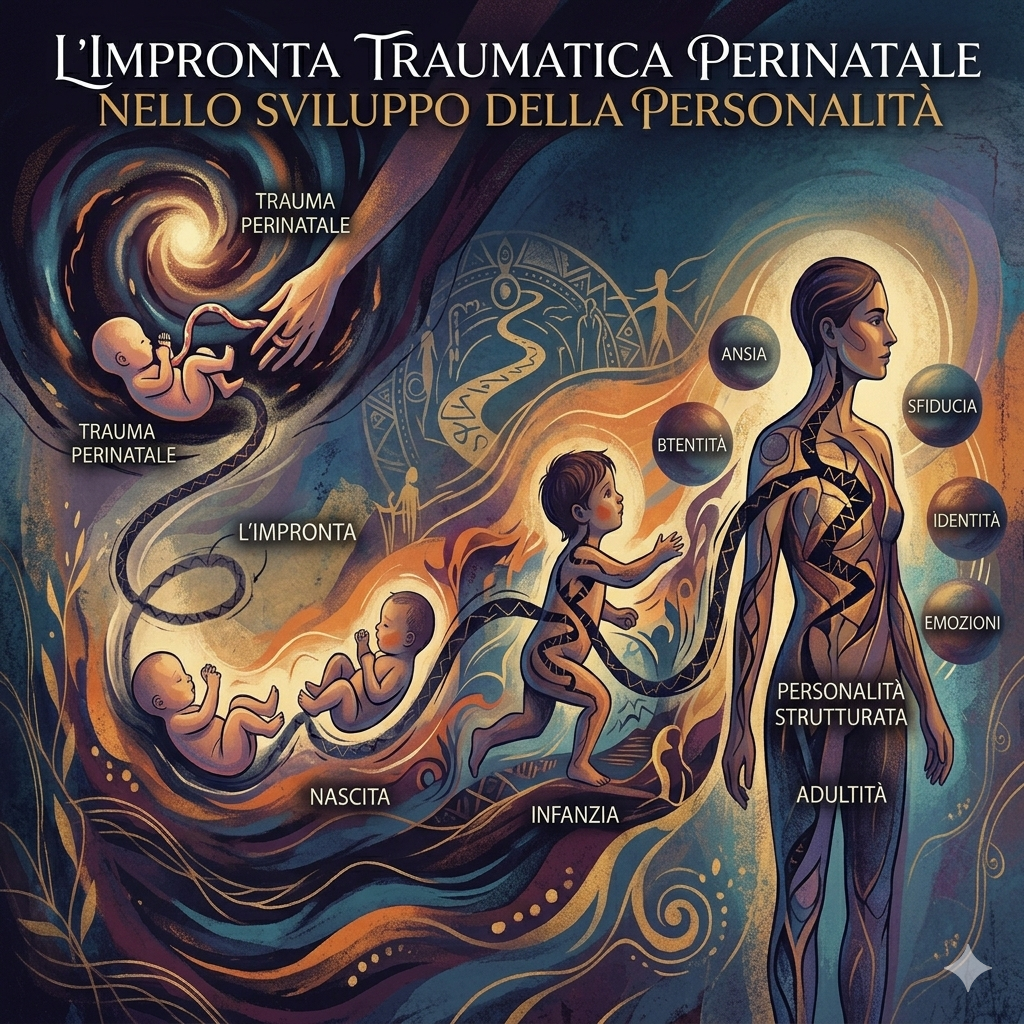
- Gene silencing: The hostile environment and rejection act as biochemical switches. According to the CIPR model, relational stress "silences" the genes of vital connection (Na’vi) to activate those of archaic survival (Terrestrial), crystallizing a framework of C-PTSD (Complex Post-Traumatic Stress Disorder).
2. The psychogenealogy of the fracture and "symbolic femminicidio"
"Outcast" children, such as Spider or Lo’ak, find themselves gravitating in an identity vacuum, crushed by a fractured psychogenealogy. They are prisoners of invisible loyalties: an internal struggle between loyalty to the mother (the victim) and unconscious identification with the father (the aggressor), generating a potentially destructive fragmentation of the Self.
In this context, the systematic rejection of the child's genetic sum translates into what Lattanzi and Calzone define as "symbolic femminicidio." This is not physical suppression, but the destruction of the children's vitality, spontaneity, and hope in the name of an ideology of purity that masks the paralyzing fear of an unprocessed trauma. Data collected by the AIPC confirms how these patterns of "contempt for origin" are at the root of profound emotional dysregulation.
3. The watershed of healing: education and neurobiological regulation
The resolution of the conflict lies not in the negation of one of the two parts, but in their conscious integration. According to the clinical model of CIPR and AIPC, the way forward requires:
- Emotional Education: Understanding that the hatred for one’s human half is, in reality, a traumatic legacy projected by the parents. This awareness is the decisive watershed to stop being victims of the past and begin to "reclaim one's life."
- Breath Regulation: "Knowing how to breathe" becomes the fundamental neurobiological technique. It is not just a physiological act, but the tool to modulate the biochemistry of stress, allowing the offspring to coexist with their hybrid nature without activating destructive or predatory responses.
Conclusion: transforming the condemnation into resilience
Ultimately, the challenge of Avatar 3 reflects the challenge of every traumatized human system: accepting that children are the sum of everything we have been, including the parts we would wish to erase. Healing occurs when the "unacceptable sum" ceases to be a condemnation and is transformed, through the therapeutic bond and care, into a new form of resilience.
If you feel that your identity is fragmented or crushed by oppressive family expectations, our professionals in Pescara and Rome are ready to welcome you with personalized clinical pathways based on the work of Lattanzi and Calzone.
Contacts for specialized support:
- Reference Website: www.associazioneitalianadipsicologiaecriminologia.it
- Email: aipcitalia@gmail.com
- Phone/WhatsApp: 3924401930