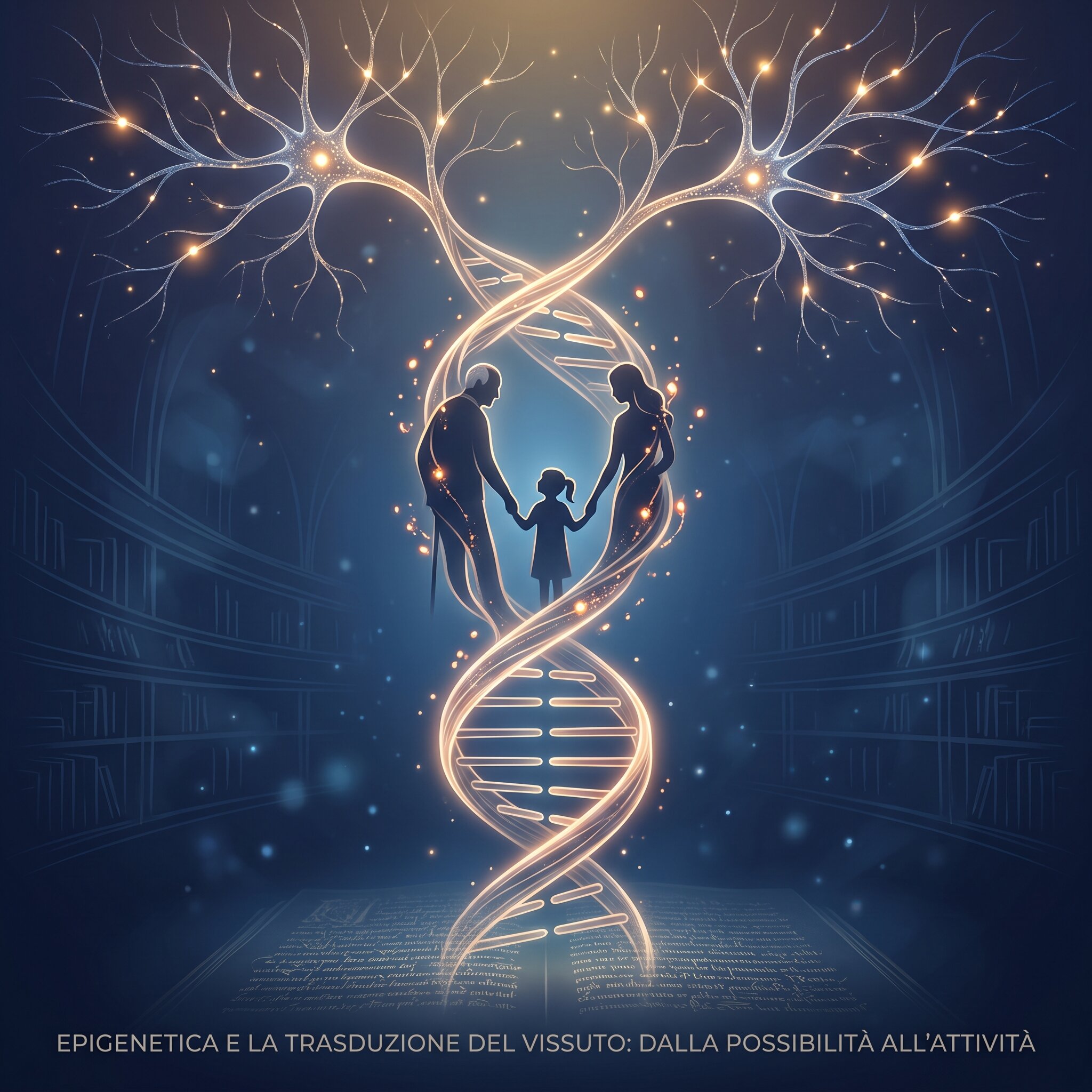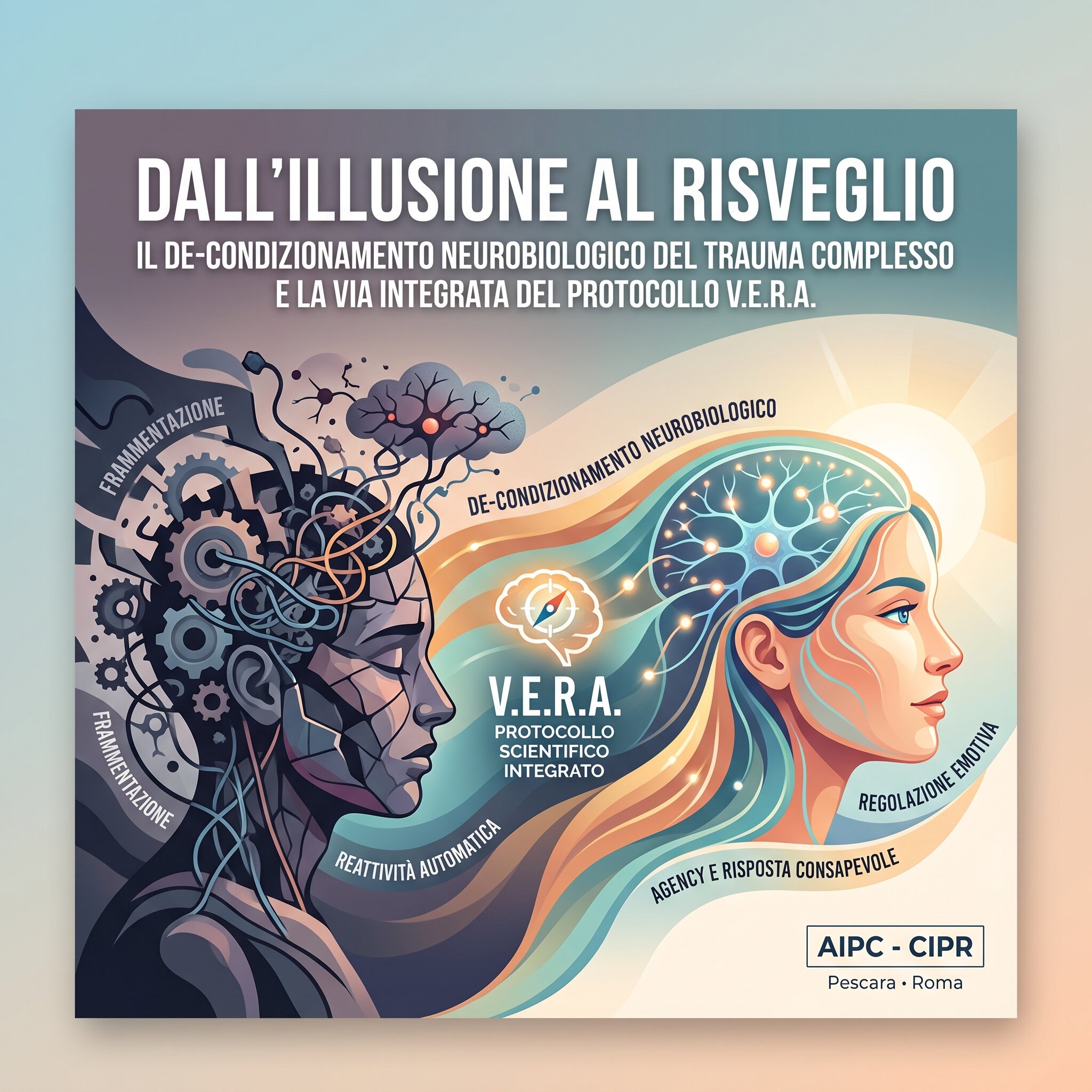
How trauma changes brain architecture
Edited by: Massimo Lattanzi and Tiziana Calzone
Entities: Italian Association of Psychology and Criminology (AIPC), Italian Center for Relational Psychotraumatology (CIPR), National Observatory on Family Homicides (ONOF).
Abstract
Early life adversities are not limited to affecting isolated brain areas; they reconfigure the entire neural network, predisposing the individual to chronic vulnerability. This article delves into the molecular and systemic mechanisms of such reprogramming, utilizing research data conducted by Uselman et al. (2026) and integrating it with the AIPC and CIPR model of relational psychotraumatology. The objective is to analyze how basal brain hyperactivity and threat sensitization reduce the window of tolerance, fueling emotional dysregulation and the risk of acting out (passaggi all'atto).
INTERNATIONAL SUMMIT – SAVE THE DATE
Rome, February 13, 2026 | 3:00 PM – 7:00 PM SALA TEVERE, Regione Lazio – Via C. Colombo, 212 FROM C-PTSD TO PET THERAPY: INTEGRATED PATHWAYS FOR EMOTIONAL REGULATION. A panel of excellence for the assessment of complex trauma and violent relational dynamics. Free admission. Reservation required.
1. Mapping brain activity: beyond individual regions
Recent scientific research has moved past the localizationist approach. Thanks to advanced techniques such as Manganese-Enhanced Magnetic Resonance Imaging (MEMRI), it has been demonstrated that childhood trauma acts as an "architect" that reorganizes the brain on a global scale.
- Diffuse basal hyperactivity: The study highlights that early adversities induce a state of high neural activity that persists into adulthood, regardless of the presence of immediate stressful stimuli.
- Survival systems and default mode network: Alterations do not only concern the cortex but extend to deep structures responsible for survival instincts (amygdala, hypothalamus). These areas remain "switched on," depleting the cognitive resources necessary for social regulation.
2. Threat sensitization and emotional dysregulation
A cornerstone of Uselman’s research (2026) is the discovery that the traumatized brain responds disproportionately to new threats. Through the lens of Lattanzi and Calzone, this translates into an extremely narrow window of tolerance.
- Exiting the window of tolerance: In individuals with C-PTSD (Complex Post-Traumatic Stress Disorder), even neutral or mildly stressful stimuli can trigger an exit from the window of tolerance, leading to states of hyper-arousal (anger, panic) or hypo-arousal (dissociation).
- Loss of impulse control: Chronic hyperactivity of threat circuits compromises the inhibitory capacity of the prefrontal cortex. Serious "acting out" thus becomes the clinical consequence of a mind that can no longer process emotion within the relationship.
3. Chemical messengers and intervention perspectives
The research suggests that identifying specific molecular pathways and chemical messengers is the key to future treatments. In the clinical field, AIPC and CIPR already apply this principle through:
- Biofeedback protocols: Tools used to monitor and "reset" the physiological stress response, helping the individual regain self-regulation.
- Analysis of familiarity: The AIPC approach emphasizes how the degree of familiarity in family homicides and relational crimes is closely linked to these dynamics of deep dysregulation, where the "other" is no longer perceived as an attachment figure but as an intolerable threat.
Conclusion
Understanding which regions have been sensitized by trauma allows for a shift from a "clinic of the symptom" to a "clinic of repair." The challenge of relational psychotraumatology is to "defuse" the permanent alert circuits created by early adversity. Only through an intervention that integrates neurobiological awareness and the repair of the affective bond is it possible to prevent the onset of anxiety, depression, and violent behavior.
The Italian Center for Relational Psychotraumatology (CIPR) and AIPC offer specialist support for anyone who recognizes their personal history in these dynamics, promoting pathways for growth and emotional stability.
- Website: www.associazioneitalianadipsicologiaecriminologia.it
- Email: aipcitalia@gmail.com
- WhatsApp: +39 3924401930
Bibliographic references
- Petrova, K. (2026). Early life adversity can radically reprogram global brain dynamics.
- Uselman, T. W., Jacobs, R. E., & Bearer, E. L. (2026). Reconfiguration of brain-wide neural activity after early life adversity, PNAS.
- Lattanzi, M., Calzone, T. AIPC/CIPR Research Archive on C-PTSD and the Window of Tolerance.
- Documented research by CIPR, ONOF, AIPC on emotional dysregulation and acting out.
© 2026 AIPC Editore – All Rights Reserved Any use, even partial, is prohibited without mandatory citation of the source for any format (online, print, video, audio, reports, and publications). Violations will be prosecuted according to the law.