Clinical and criminological analysis of the A. S. case: Complex traumatization, emotional dysregulation, and the neurobiological deception of the “i’m fine” circuit
Edited by: Massimo Lattanzi and Tiziana Calzone
Methodological Note: This report is developed exclusively through OSINT (Open Source Intelligence) methodology, based on the systematic collection, selection, and analysis of data from open sources and journalistic outlets. This analysis is not intended to replace the work of relevant authorities or official institutional data. It serves as a further clinical and phenomenological contribution based on the application of integrated scientific protocols (AIPC, CIPR, ONOF), consolidated through the study of a vast population of subjects gathered over twenty-five years of field activity and research.
The story of A. S. represents a paradigmatic case for studying the dynamics of extreme violence arising in contexts of proximity and for assessing recidivism through the lens of relational psychotraumatology. The case, which culminated in 2011 with the murder of her elderly neighbor F. M. and marked by a recent critical evolution in February 2026 with her failure to return from a prison leave, offers an opportunity for deep analysis supported by the theoretical and clinical models of the Italian Association of Psychology and Criminology (AIPC), the Italian Center of Relational Psychotraumatology (CIPR), and the National Observatory on Family Homicides (ONOF).
Through the study of the methodological approaches of Massimo Lattanzi and Tiziana Calzone, it is possible to decode the subject's behavior as the result of a complex traumatic architecture characterized by Complex Post-Traumatic Stress Disorder (C-PTSD), severe emotional dysregulation, and the clinical phenomenon described as the "I'm fine" paradox.
Historical and Phenomenological Framework of the A. S. Case
The criminal and custodial trajectory of A. S. must be analyzed starting from the original event leading to the recent breach of the rehabilitative pact. The woman's biographical profile outlines a precise chronology: the murder of F. M. occurred in 2011 in Bollate, motivated by the theft of the victim's ATM card. S., who is now 42 years old, was serving a sentence at Bollate Prison with an expected release date in 2032. Although she had been utilizing prison leaves since 2023, on the evening of February 15, 2026, she failed to return to the facility, triggering a search for escape.
The 2011 murder fits a typology that ONOF classifies as "proximity homicide." In these cases, violence is not necessarily linked to blood ties but to relationships based on physical and relational closeness. The choice of a vulnerable victim and the disproportion between the stimulus (the need for money) and the response (the homicidal act) suggest a compromise in emotional regulation. According to Lattanzi and Calzone, aggression toward a proximity figure may reflect the re-enactment of childhood traumatic dynamics, where the victim becomes the object upon which unsatisfied external regulation needs are projected.
The failure to return in 2026, just a few years before final release, raises questions about the actual processing of the trauma. From a psychotraumatological perspective, these episodes can represent "self-regulation failures" in the face of transition anxiety or the reactivation of abandonment fears related to the imminent end of the sentence.
The Lens of Relational Psychotraumatology
The theoretical model developed by Lattanzi and Calzone allows for the interpretation of the case through the concepts of C-PTSD and emotional dysregulation, moving beyond the dichotomy of guilt vs. illness toward a functional understanding of deviant behavior.
C-PTSD and the Window of Tolerance
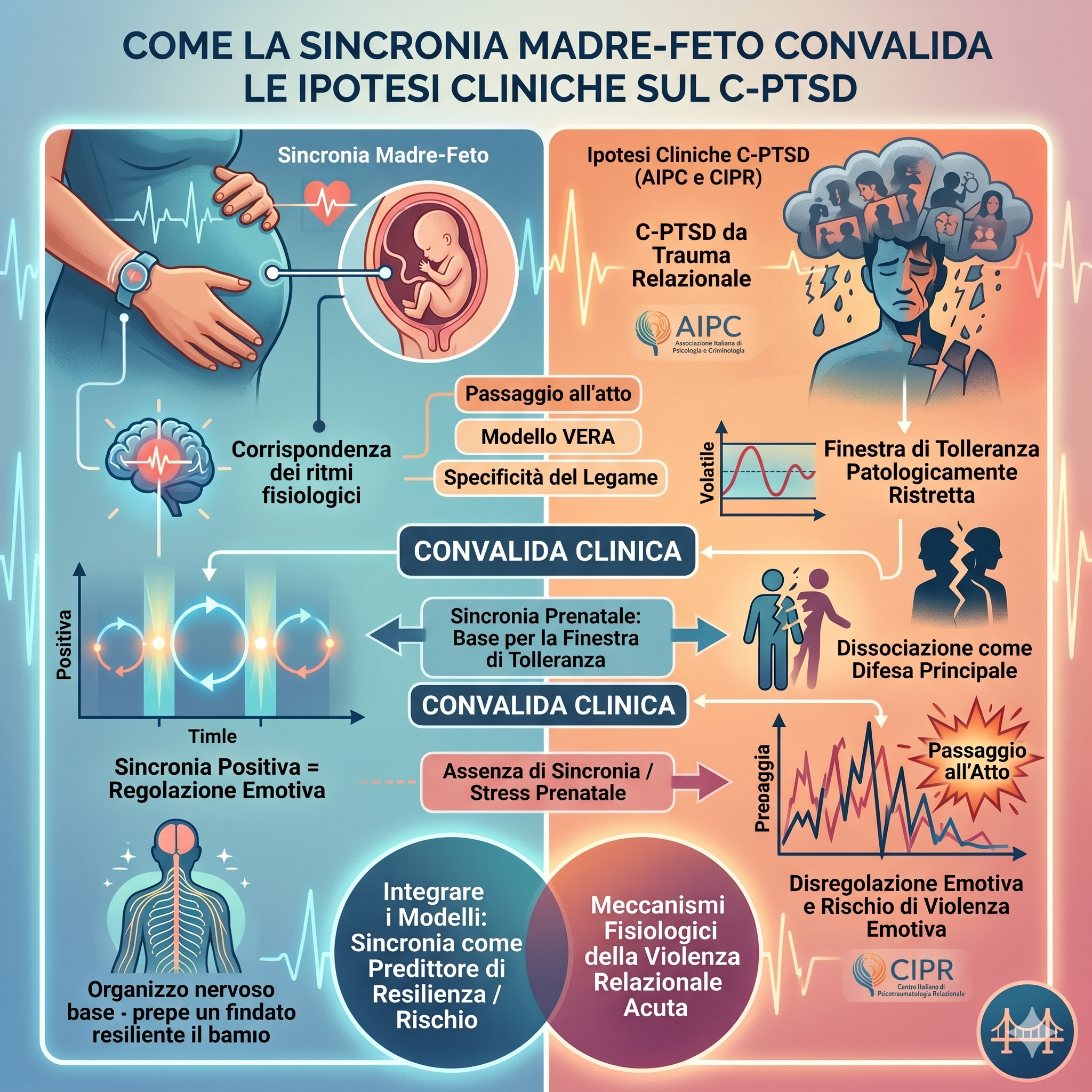
C-PTSD originates from chronic interpersonal traumas that condition an individual's ability to stay within their "window of tolerance"—the range of nervous system activation where emotions and information can be processed rationally. When a subject with a history of neglect or abuse exits this window, they enter a state of hyper-arousal (rage, panic) or hypo-arousal (dissociation). In these states, action becomes an automatic attempt to regain balance, often through violence or flight.
The Caregiver Paradox and the Traumatic Bubble
At the root of these dynamics is Giovanni Liotti’s "Caregiver Paradox," which occurs when an attachment figure is simultaneously a source of fear and protection. This conflict leads to disorganized attachment and the formation of a "Traumatic Bubble"—an isolated, self-referential space acting as an echo chamber for the original trauma. In S.'s case, the prison context may have acted as a protective bubble; its sudden rupture during contact with the outside world (the leave) required an autonomous regulatory capacity that was not yet consolidated.
The "I'm Fine!" Project and Neurobiological Deception
The "I'm fine!" project, presented during the International Summit on February 13, 2026, addresses the challenge of the unreliability of verbal narrative in trauma treatment. Massimo Lattanzi identifies the statement "I'm fine!" not as a sign of health, but as a "neurobiological deception." In individuals with C-PTSD, the brain may disconnect internal sensors to survive pain, creating "inner blindness" or traumatic alexithymia.
This deception can mislead correctional professionals: the subject may have sincerely reported feeling well for years, thus obtaining leaves, while her psychophysiological structure remained unstable. To overcome this, the AIPC-CIPR approach integrates Biofeedback, using parameters such as Heart Rate Variability (HRV), Galvanic Skin Response (GSR), and muscle tension (EMG) to objectify distress and identify physiological red flags before they manifest as violent actions.
The Role of ONOF and Violence Profile Analysis
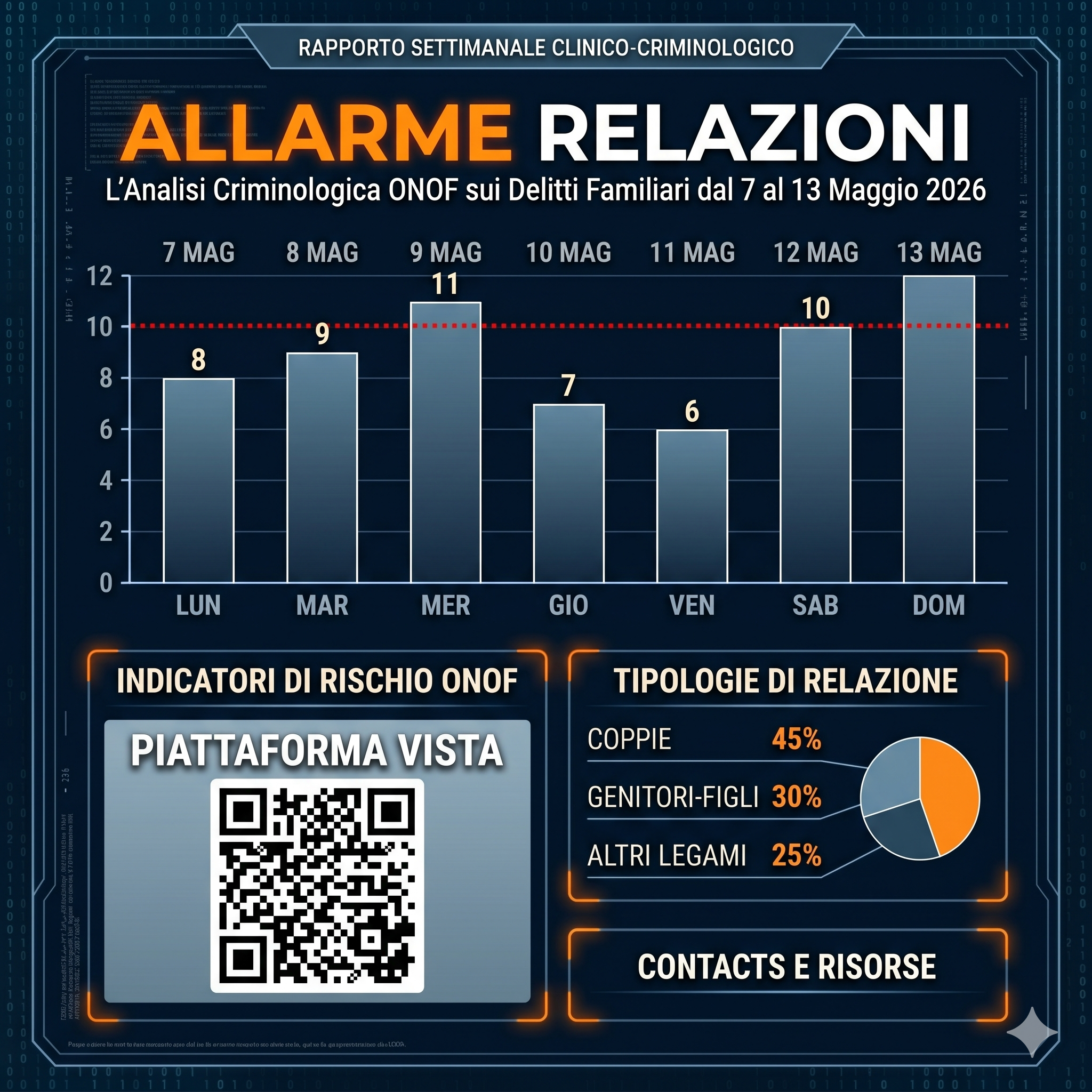
The National Observatory on Family Homicides provides essential data for risk assessment. ONOF analyses highlight crucial clinical variables: the risk of lethal violence is highest in close or proximity bonds. Aggressive methods, such as the use of sharp weapons, often indicate drive discharges resulting from the inability to regulate anger within the window of tolerance.
Recent research shows that 61% of perpetrators exhibit critical levels of somatization and narcissistic or negativistic traits, while 67% of victims manifest hypervigilance and guilt. These data confirm that the "acting out" phase is preceded by a closure of discourse, where distress finds no outlet other than the physical act.
Intervention Strategies: The V.E.R.A. Protocol and Integrated Model
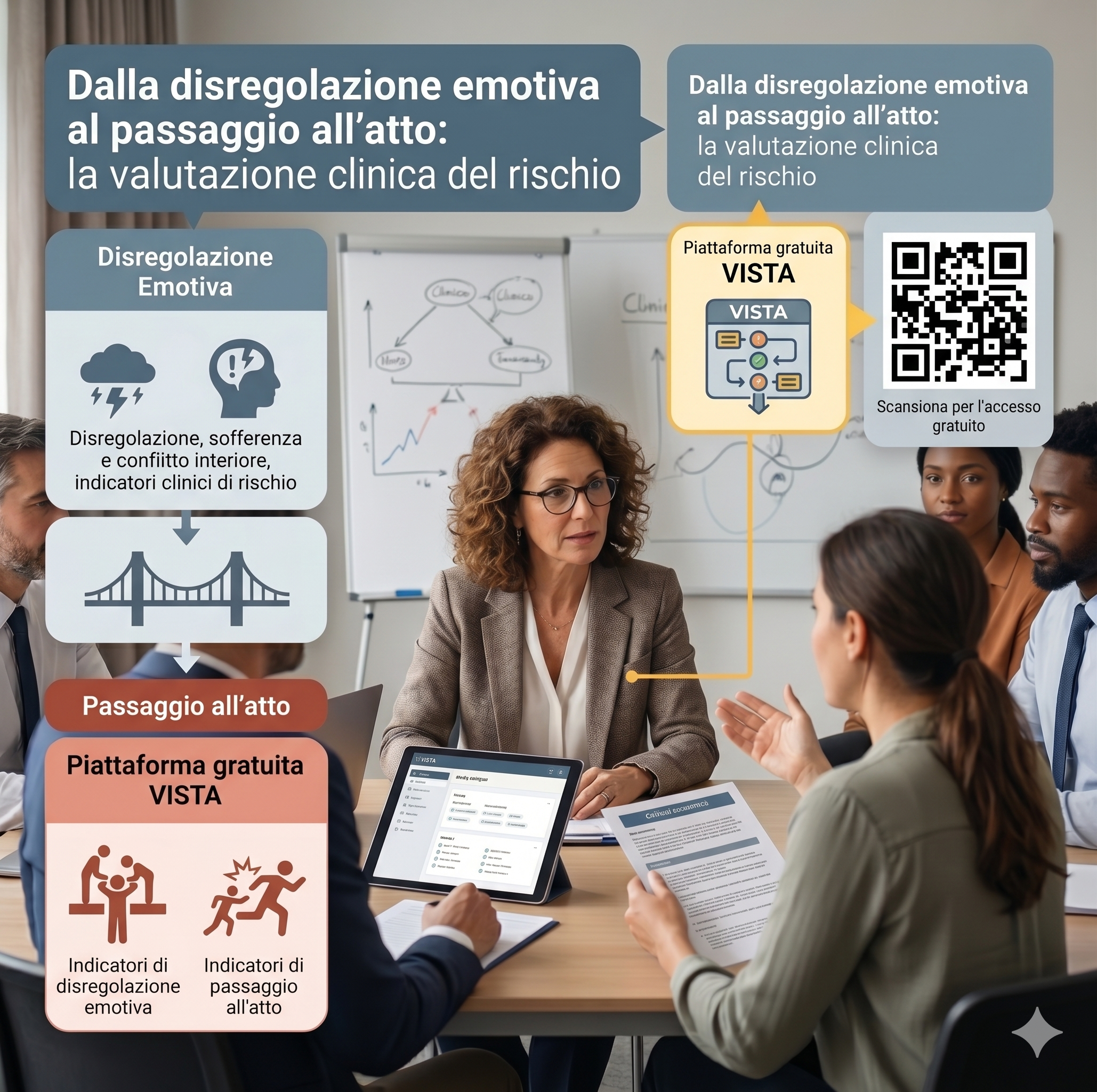
To prevent recidivism and manage risk, AIPC proposes the V.E.R.A. (Violence Emotional Risk Assessment) protocol. This tool represents the state-of-the-art in predictive diagnosis and the treatment of Relational C-PTSD, marking the transition from descriptive clinical practice to neurobiological precision therapy.
The V.E.R.A. Protocol and the Reconstruction of Self
The V.E.R.A. protocol moves away from purely social evaluations toward a rigorous clinical assessment of violence risk. Together with the AIPC-CIPR integrated model, the path includes:
- Trauma Diagnosis: Using scales to map the impact of relational wounds.
- Self-Regulation Training: Employing Biofeedback (HRV, GSR, and EMG) to teach the subject to modulate involuntary physiological stress and improve body awareness.
Clinical-Forensic Conclusions and Recommendations
The analysis of the A. S. case demonstrates that external compliance and verbal statements are insufficient indicators of rehabilitation. The application of the V.E.R.A. protocol suggests that risk assessment must include the objective capacity to remain within the window of tolerance during stressful moments, such as prison leaves.
In summary, the AIPC/CIPR model applied to this case highlights how identifying C-PTSD explains the disproportionate violence of 2011 as a regulatory failure. Overcoming the "I'm fine" paradox through the monitoring of Heart Rate Variability, Galvanic Response, and muscle tension would allow for a much more accurate recidivism risk profile based on neurobiological stability. Finally, the protocol offers practical tools for post-detention affective regulation, essential for preventing freedom from being perceived as an intolerable stimulus by a nervous system still trapped in a traumatic past.
Upcoming 25th Anniversary Events
We invite you to stay by our side for future training and research:
- March 2026: For Brain Awareness Week (March 27), AIPC will offer free webinars on new studies in emotional regulation and trauma neurobiology.
- April 2026: On April 22, a new seminar cycle begins in collaboration with Continuing Education in Psychology (FCP).
- May and June 2026: Technical meetings and experiential labs focused on integrating biofeedback and Animal-Assisted Interventions (AAI).
Support Our Research: Your contribution is vital for our next 25 years.
- 5x1000 (Italy): Fiscal Code 97238660589.
- Donations: IBAN IT83I0760103200000056039688.
Contact Information:
- Web: www.associazioneitalianadipsicologiaecriminologia.it
- Email: aipcitalia@gmail.com
- WhatsApp: +39 3924401930 (Daily, 11:00 AM – 4:00 PM)