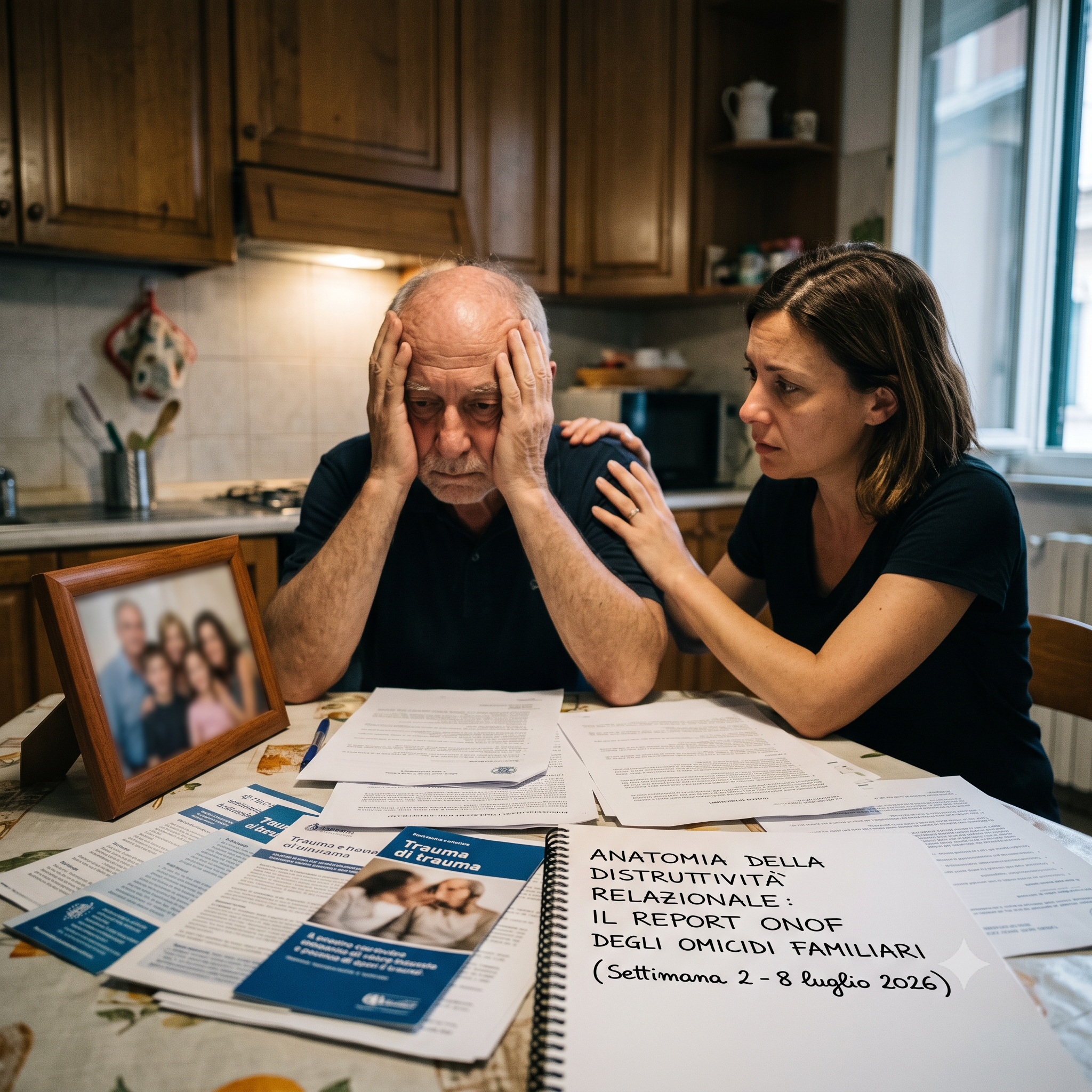
Shadows over La Pedrera: Etiopathogenesis of serial violence and dynamics of systemic revenge. clinical-criminological analysis by the Italian Center for Relational Psychotraumatology
Reference: “City of Shadows” Series – Case Study: The Casa Milà Killers
Curated by: Massimo Lattanzi and Tiziana Calzone
Reference Bodies: Italian Association of Psychology and Criminology (AIPC), Italian Center for Relational Psychotraumatology (CIPR), and National Observatory on Family Homicides (ONOF).
Abstract
This paper analyzes the psychopathological profile of the two serial killer brothers, protagonists of the crime chronicle linked to Casa Milà. Using the study "Etiopathogenesis of serial violence: a retrospective study on a sample of 20 subjects" (Lattanzi & Calzone, AIPC Editore) as an interpretive grid, a significant overlap is highlighted between the subjects' anamnesis and the predictive variables of extreme violence. The analysis demonstrates how Complex Relational Trauma (C-PTSD) and targeted revenge constitute structured dysfunctional responses to the collapse of attachment systems and the failure of protective agencies.
1. Statistical confirmation: tthe brothers in the sample
The two brothers do not represent an exception, but rather a dramatic confirmation of the data emerging from Lattanzi and Calzone’s retrospective study. Their biography faithfully follows the percentages observed in the clinical sample of violent subjects, outlining a path of progressive traumatization:
- Cumulative childhood traumas (95% of the sample): In line with the totality of the study subjects, the brothers suffered early traumas that compromised neurobiological development. Specifically, the lethal sequence: maternal bereavement followed by "Spectator Trauma" (witnessing), resulting from helplessly watching their father's execution.
- Physical and psychological abuse: Institutionalization in the care facility, which proved to be a place of coercion and torture, confirms the extremely high incidence of prior abuse in the genesis of serial violence.
- Abandonment and family disintegration: The loss of parental figures and subsequent ousting from the protective social fabric destroyed the primary attachment system, leaving the subjects at the mercy of chronic emotional dysregulation without a "secure base."
Listen to the podcast on the AIPC Editore Channel on Spotify, MIND|CRIME|TRAUMA: “ONOF Report week December 4 – 10, 2025: the trap of familiarity and the body as a weapon. An OSINT analysis on family homicides”, click the link: https://open.spotify.com/episode/2pyaVq3QrfE4r2BTMZqTEs?si=3L-CSm_nRuG_ILFiKLFqPQ
2. Emotional dysregulation and C-PTSD: Profiles compared
While sharing the same traumatic matrix, the two brothers manifest Complex Post-Traumatic Stress Disorder through opposing phenotypes, reflecting complementary survival strategies:
- The Brother (The Hyper-aroused Executioner): The trauma of his father's death crystallized a state of hyper-arousal in him. His violence is driven by the hyper-activation of the RAGE system (Panksepp). He kills to compensate for infantile helplessness; every violent act is a desperate and magical attempt to retroactively protect the lost parent and re-establish an archaic form of justice.
- The Sister (The Dissociated Director): She shows traits of emotional detachment and structural dissociation. Having suffered pervasive forms of control, she developed a pathological need to dominate her environment. She organizes the crime scene with coldness, using the architecture of La Pedrera as an extension of her mind. Hers is an Identification with the Aggressor: she became the executioner she feared, to avoid being a victim again.
For those wishing to delve deeper into the details of the research cited by Dr. Lattanzi, including the specific analysis of the sample and clinical correlations, the full article is available: Etiopathogenesis of serial violence: a retrospective study on a sample of 20 subjects. Correlations between Complex Post-Traumatic Disorder (C-PTSD), ANS dysregulation, and self-care strategies (STAS). Part One. Link to the article: AIPC Article Link
3. Victimological analysis: revenge as a paradoxical "cure"
Unlike serial killers who strike opportunistically, the two brothers act according to a logic of systemic revenge, confirming the general trends detected by ONOF.
- The ONOF Data: Constant surveys by the National Observatory on Family Homicides highlight that male victims are predominantly struck within a network of acquaintances or kinship. In the series, this statistic becomes narrative: the brothers do not kill strangers, but figures they know and recognize as guilty (directly or morally) of their father's death and their suffering in the institution.
- The Modus Operandi: The torture inflicted is not random sadism, but a symmetrical restitution of pain. They force the guilty to undergo the same deprivations (darkness, hunger, isolation, physical constraint) suffered in the care facility. It is an attempt to validate their own suffering by forcing the other to experience it.
Summary of FCP – AIPC webinar, December 12, 2025. Beyond the symptom – Decoding addiction through trauma and the S.T.A.S. scale. Link to the article: Webinar Summary Link
4. The detectives: traumatic resonance and mirrors
The investigation is conducted by two figures who mirror the killers' pathology, thinning the line between investigators and criminals.
- Detective A (PTSD): Suffering from classic post-traumatic stress, he experiences intrusive flashbacks triggered by details of the crime scenes. He recognizes the fear he himself harbors in the victims, risking emotional overload.
- Detective B (C-PTSD): His history of complex trauma allows him to decode the logic of the brothers' revenge. He understands that they were not born "monsters," but are the residual product of the system's failure.
- Clinical Implications: As suggested by CIPR protocols, without the aid of regulation techniques such as biofeedback, these investigators risk vicarious traumatization, ending up dangerously resonating with the killers' deep motivations.
Conclusions: unprocessed trauma as destiny
The analysis of the case confirms Lattanzi and Calzone's central hypothesis: the serial violence of the two brothers is the outcome of an etiopathogenic process where the absence of grief processing and the lack of valid therapeutic figures transformed pain into a script of death. The "City of Shadows" becomes a metaphor for a psyche where trauma, untreated, is condemned to eternal repetition.
References and resources
To delve deeper into the topics discussed or to request specialized support on trauma and emotional dysregulation:
Reference study: Eziopatogenesi della violenza seriale: studio retrospettivo su un campione di 20 soggetti – Curated by Massimo Lattanzi and Tiziana Calzone (AIPC Editore).
Contacts for consultation and clinical pathways (Rome and Pescara): The CIPR offers integrated pathways with biofeedback for trauma management and emotional regulation.
Email: aipcitalia@gmail.com
Website: www.associazioneitalianadipsicologiaecriminologia.it
WhatsApp: +39 3924401930
Interrupting the chain of trauma is possible. You are not alone.