Family secrets and emotional anesthesia: a psychotraumatological analysis of the tv series "Fuga"
Edited by: Massimo Lattanzi and Tiziana Calzone.
Organizations: Italian Association of Psychology and Criminology (AIPC), Italian Center for Relational Psychotraumatology (CIPR), and National Observatory on Domestic Homicide (ONOF).
Abstract
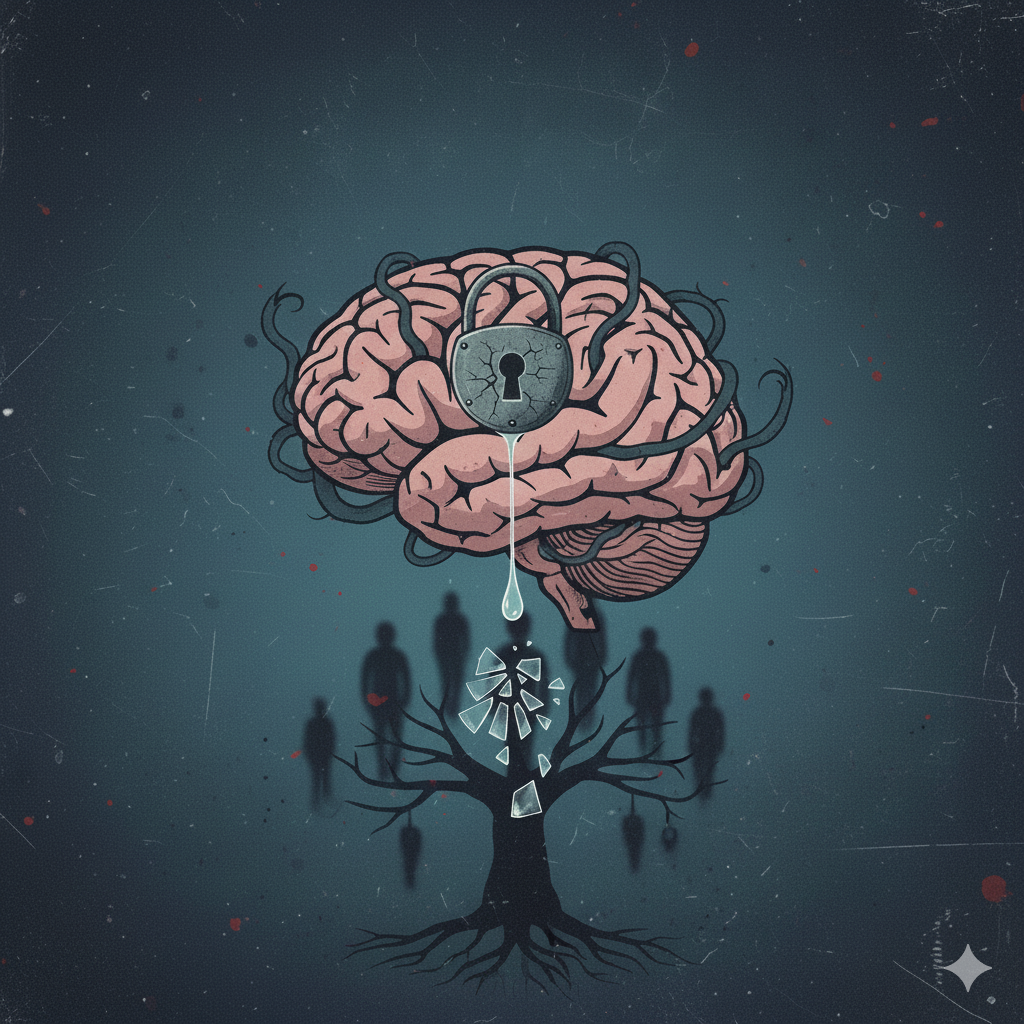
This study analyzes "family secrets" and adoption-related trauma as disintegrating cores of identity, filtered through the paradigm of emotional dysregulation. The investigation explores how substance abuse following sexual assault represents a form of "emotional anesthesia" necessary to forcibly return to the window of tolerance. By integrating data from the STAS and SVITR scales, the study highlights how the repair of the relational bond and clinical education represent the only turning points toward healing.
BEYOND TRAUMA AND VIOLENCE: THE SCIENCE THAT HEALS! SAVE THE DATE | COMING SOON Rome, February 13, 2026 | 3:00 PM – 7:00 PM INTERNATIONAL SUMMIT VIOLENCE, COMPLEX TRAUMA, AND EMOTIONAL REGULATION: The science of assessment and integrated interventions: from clinical practice to Pet Therapy.
1. Family secrets and the window of tolerance
In the series Fuga, the secret is not merely an absence of information, but a chronic stressor that alters communication. According to the Lattanzi-Calzone model, the secret constantly pushes members of the family system outside their window of tolerance:
- Hyper-arousal: States of anxiety and reactive hyper-vigilance.
- Hypo-arousal: Emotional detachment and psychic numbness.
This oscillation prevents self-stability, turning the domestic environment into a source of ambiguity rather than a secure base.
2. Adoption and the fracture of regulation
Unprocessed adoption, intertwined with systemic lies, acts as an identity fracture. The individual experiences a relational trauma where the nervous system fails to process "foreign" information, leading to peaks of dysregulation. The search for origins becomes a desperate attempt to create a narrative sense to stabilize a fragmented psychic system.
Choose to stand on the side of care. Your 5x1000 signature (C.F. 97238660589) and donations are the energy that allows our volunteer professionals to welcome those who suffer, study risk profiles, and offer a way out from the "condemnation to repeat" the trauma. Together, we can expand the space for healing and restore balance to human relationships.
3. Post-Rape self-medication: data from the STAS scale
Substance abuse following sexual trauma is interpreted not as recreational addiction, but as self-medication. Results collected via the STAS (Traumatic and Substance Self-Medication Scale) and the SVITR highlight:
- Anesthesia function: Substances act as a switch to turn off traumatic hyper-arousal (flashbacks and terror) that the individual cannot manage autonomously.
- Clinical correlation: High scores on the STAS scale show a marked difficulty in impulse regulation, confirming that the substance is the only tool to simulate an apparent calm when the "Emotional Part" (EP) of the Self has collapsed.
- CIPR data: Findings indicate that without specialist intervention, relational trauma condemns the individual to repetition, whereas education and awareness act as decisive protective factors.
Conclusion
Healing from the deep traumas described in Fuga requires a transition from chemical anesthesia to assisted emotional regulation. The CIPR approach, which integrates tools such as biofeedback and quantitative assessment via the STAS scale, allows for the reconstruction of internal safety. As suggested by the studies of Lattanzi and Calzone, the possibility of healing lies in the ability to integrate traumatic fragments into a coherent and conscious narrative.
Support and resources
If you recognized yourself in these dynamics or feel that traumatic experiences have influenced your emotional regulation, you are not alone. The Italian Center for Relational Psychotraumatology (CIPR) offers specialized pathways in Pescara and Rome.
- Email: aipcitalia@gmail.com
- WhatsApp: 3924401930
- Website: www.associazioneitalianadipsicologiaecriminologia.it
© 2026 AIPC Editore – All Rights Reserved Any use, even partial, is prohibited without mandatory citation of the source for any medium (online, print, video, audio, reports, and publications). Violations will be prosecuted according to the law.
.png "La clinica del passaggio all'atto: Report ONOF dei delitti familiari (14-20 Maggio 2026)")