Adults with ADHD desire more support in relationships, but often feel neglected
Edited by: Massimo Lattanzi and Tiziana Calzone
Organizations: Italian Association of Psychology and Criminology (AIPC), Italian Center for Relational Psychotraumatology (CIPR), National Observatory on Family Homicides (ONOF).
Abstract
This article examines the dynamics of social support in adults with ADHD, analyzing the discrepancy between perceived need and help received in romantic relationships. Based on the research by Duede et al. (2026), it highlights how symptoms such as inattention, hyperactivity, and emotional dysregulation modulate the perception of care and vulnerability to rejection. The analysis integrates scientific data with the relational psychotraumatology paradigm, interpreting the "support gap" as a manifestation of the narrow window of tolerance typical of complex trauma (C-PTSD) frameworks.
BEYOND TRAUMA AND VIOLENCE: THE SCIENCE THAT HEALS! SAVE THE DATE | COMING SOON Rome, February 13, 2026 | 3:00 PM – 7:00 PM
INTERNATIONAL SUMMIT VIOLENCE, COMPLEX TRAUMA, AND EMOTIONAL REGULATION: The science of assessment and integrated interventions: from clinical practice to Pet Therapy.
The "support gap" and the impact of ADHD symptoms
In intimate relationships, social support consists of five types: emotional, esteem, network, informational, and tangible. However, adults with ADHD often experience a profound discrepancy, defined as a "support gap," between the help desired and that actually perceived from the partner.
Research published in the Journal of Social and Personal Relationships indicates that symptom severity directly influences these dynamics:
- Hyperactivity and communication: Hyperactivity significantly widens the gap between desired and received support. Impulsive communication styles and difficulty slowing down to process offered help can make requests unclear to partners.
- Emotional dysregulation and vulnerability: This symptom is a strong predictor of "hurt feelings." Individuals with emotional regulation difficulties report higher levels of pain during interactions, showing greater sensitivity to negative feedback or perceived slights.
- Inattention: The tendency toward forgetfulness or distraction also contributes to an increased sense of suffering during supportive interactions.
25 Years of AIPC: Transforming trauma into healing and breaking the cycle of violence
For a quarter of a century, the Italian Association of Psychology and Criminology (AIPC) has been at the forefront against violence and femminicidio. We combine science and humanity through advanced clinical protocols, such as Biofeedback, to rebuild emotional balance and break the cycle of trauma.
Support our mission: Invest in change Your contribution or sponsorship is the engine for concrete social impact. Thanks to your support, we can:
- Expand training in schools to reach thousands of students with prevention programs.
- Enhance training for Law Enforcement on the "Codice Rosso" and trauma management.
- Multiply risk assessment protocols for "acting out" (passaggio all'atto) and recidivism.
- Break the intergenerational transmission of violence.
- Tax Benefits (D.Lgs. 117/2017): For Individuals: 30% IRPEF deduction. For Companies: Deductibility up to 10% of total declared income.
- 5x1000: A fundamental support at zero cost. Enter our Fiscal Code AIPC: 97238660589.
Clinical analysis and relational psychotraumatology
Through the lens of relational psychotraumatology promoted by AIPC and CIPR, ADHD is not read exclusively as an individual defect (medical model), but within a social model where disability emerges from the interaction between the individual and the environment.
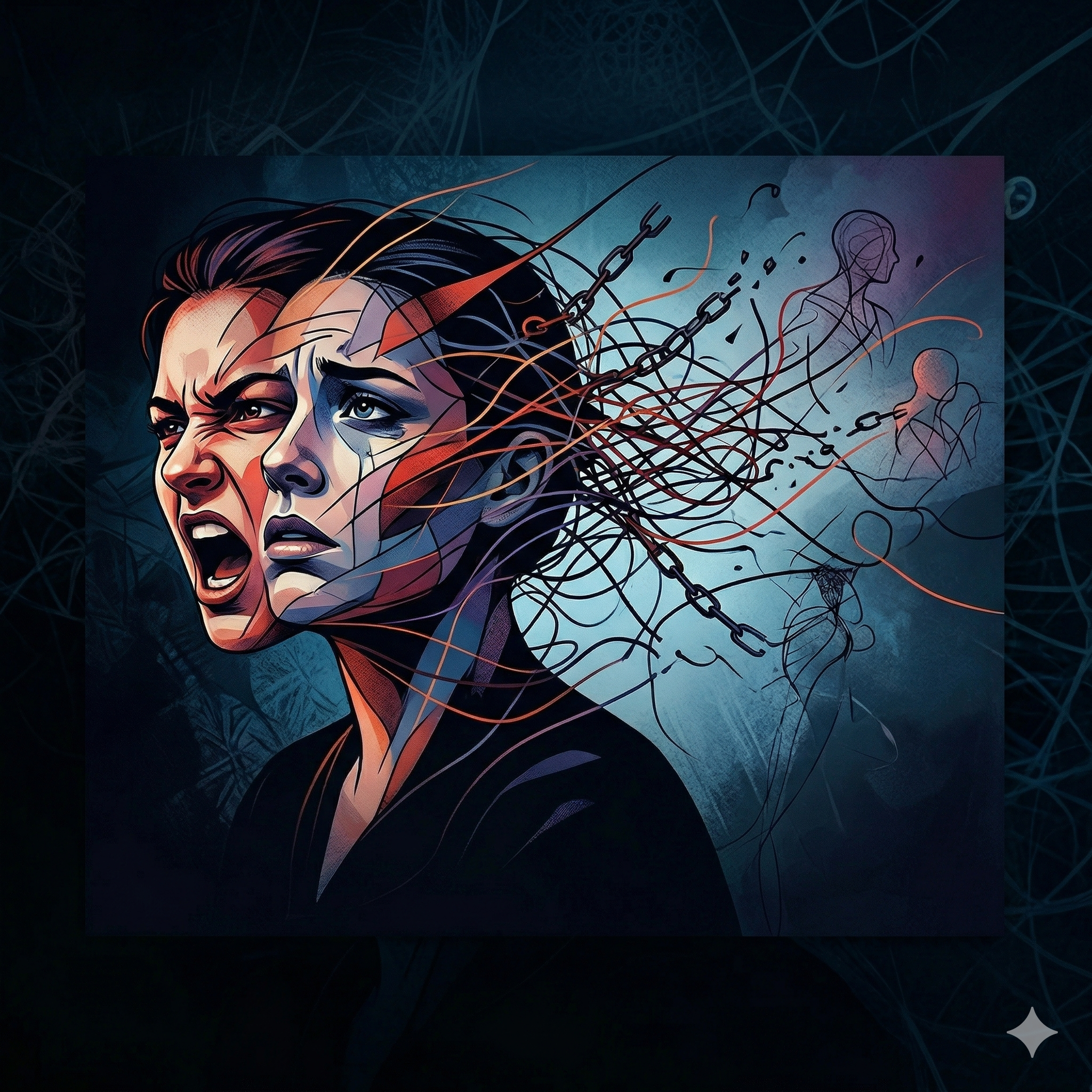
In people with C-PTSD, the window of tolerance is often very narrow. A severe acting out or an intense emotional reaction represents a loss of impulse control due precisely to exiting this zone of equilibrium. The intense desire for support and validation can make these individuals extremely vulnerable: an unmet need is experienced as a true relational trauma that fuels dissatisfaction and diminished self-esteem.
Conclusion
The study results highlight that relationship satisfaction can act as a powerful buffer, helping the adult with ADHD interpret partner actions more positively. However, it is necessary to overcome the "masking" of needs to foster direct communication strategies.
From the perspective of clinical risk assessment (ASVS protocol), it is fundamental to consider how emotional dysregulation and the degree of familiarity condition the stability of the bond. Clinical support, integrated with tools like biofeedback, must aim at widening the window of tolerance to allow for real management of the "support gap" and promote relational healing.
Contacts and specialist support
CIPR and AIPC operate in Pescara and Rome following this rigorous scientific protocol. If you feel that complex dynamics are influencing your life, you are not alone.
Email:aipcitalia@gmail.com
WhatsApp: +39 3924401930
Website: www.associazioneitalianadipsicologiaecriminologia.it
Bibliographic references
- AIPC/CIPR/ONOF: Research on emotional dysregulation, C-PTSD, and the window of tolerance.
- Duede, L. A., et al. (2026): Social support preferences and perceived support gaps among adults with ADHD. Journal of Social and Personal Relationships.
- Petrova, K. (2026): Adults with ADHD desire more support in relationships, but often feel neglected. PsyPost.
© 2026 AIPC Editore – All rights reserved.