The scent of the wolf: beyond the fortress of complex trauma
From Narrative Evidence to C-PTSD Clinical Evaluation and the ASVS Protocol Edited by Massimo Lattanzi and Tiziana Calzone
Abstract
The novel "L’odore del lupo" (The Scent of the Wolf), written by Emanuela De Vito, is more than a narrative work; it represents a precise and raw phenomenology of C-PTSD (Complex Post-Traumatic Stress Disorder). Through Silvia's story, the drama of the "perfect fortress" emerges: a defensive structure built to survive chronic and unspeakable relational traumas. Clinically, the work documents the failure of primary protection and the onset of profound emotional dysregulation. This text analyzes how the transition from abuse to recovery requires abandoning generic social approaches in favor of scientific protocols such as the ASVS, which are capable of mapping the narrowing of the window of tolerance and the strategic nature of relational violence.
International Summit: From C-PTSD to Pet Therapy
Integrated paths of emotional regulation in cases of violence. Rome, February 13, 2026 – 3:00 PM – 7:00 PM SALA TEVERE, Regione Lazio – Via C. Colombo, 212 An elite panel for the evaluation of complex trauma and violent relational dynamics. FREE ADMISSION. RESERVATION REQUIRED. CERTIFICATE OF ATTENDANCE WILL BE ISSUED. LIMITED SEATING. Click here for the registration form
Trauma clinics: between “wolf-rats” and dysregulation
The wound described in the book is nestled within the degree of familiarity: violence suffered in the shadows of seemingly protected domestic contexts. Clinically, this translates into a constant hyper-activation of threat systems.
- The Window of Tolerance: In individuals with C-PTSD, as documented by CIPR, ONOF, and AIPC research, the window of tolerance is extremely narrow. Trauma is not a memory, but a "scent"—a sensory activation that triggers an acting-out or a dissociative collapse.
- The Relational Variable: The "wolf" is not an external predator, but a figure acting within a violent relational dynamic. Without a clinical risk assessment (ASVS Protocol), the trauma remains "unspeakable" and destined for repetition.
The path to healing: scientific protocols and integration
The protagonist's rebirth reflects the importance of integrated pathways. Healing does not occur through simple catharsis, but through:
- Clinical Vvaluation (ASVS): Identifying violence not as an isolated event, but as a dynamic linked to the affective bond.
- Emotional Regulation: Targeted interventions (from Biofeedback to Pet Therapy) to expand the window of tolerance and allow the Self to emerge from the defensive "fortress."
- From Victim to Subject: As suggested by the comparison of extreme clinical profiles, education and trauma awareness are the decisive turning points between the condemnation to repetition and the possibility of a new life.
Conclusion
Maria Pacifico’s "L’odore del lupo" reminds us that complex relational trauma requires a response that is not only supportive but rigorously scientific. Only through the profiling of violent dynamics and the use of validated protocols like the ASVS can we transform "suffocated screams" into a narrative of healing. It is time to tear down the fortress and restore dignity and safety to those trapped in silence: change begins today.
Bibliographic References and Research
- Lattanzi, M., Calzone, T. (Eds.), "L’odore del lupo: oltre la fortezza del trauma complesso".
- Pacifico, M., "L’odore del lupo", Narrative and Phenomenology of C-PTSD.
- Research documented by CIPR (Italian Center for Relational Psychotraumatology), ONOF, and AIPC on the restriction of the window of tolerance.
Contacts and Support
If you feel that complex family dynamics have deeply influenced your life, the Italian Center for Relational Psychotraumatology (CIPR), based in Pescara and Rome, offers a specialized approach to support your healing.
- Email: aipcitalia@gmail.com
- Web: www.associazioneitalianadipsicologiaecriminologia.it
- WhatsApp: +39 3924401930
© 2026 AIPC Editore – All Rights Reserved Any use, even partial, is prohibited without mandatory citation of the source for any medium (online, print, video, audio, reports, and publications). Violations will be prosecuted according to the law.
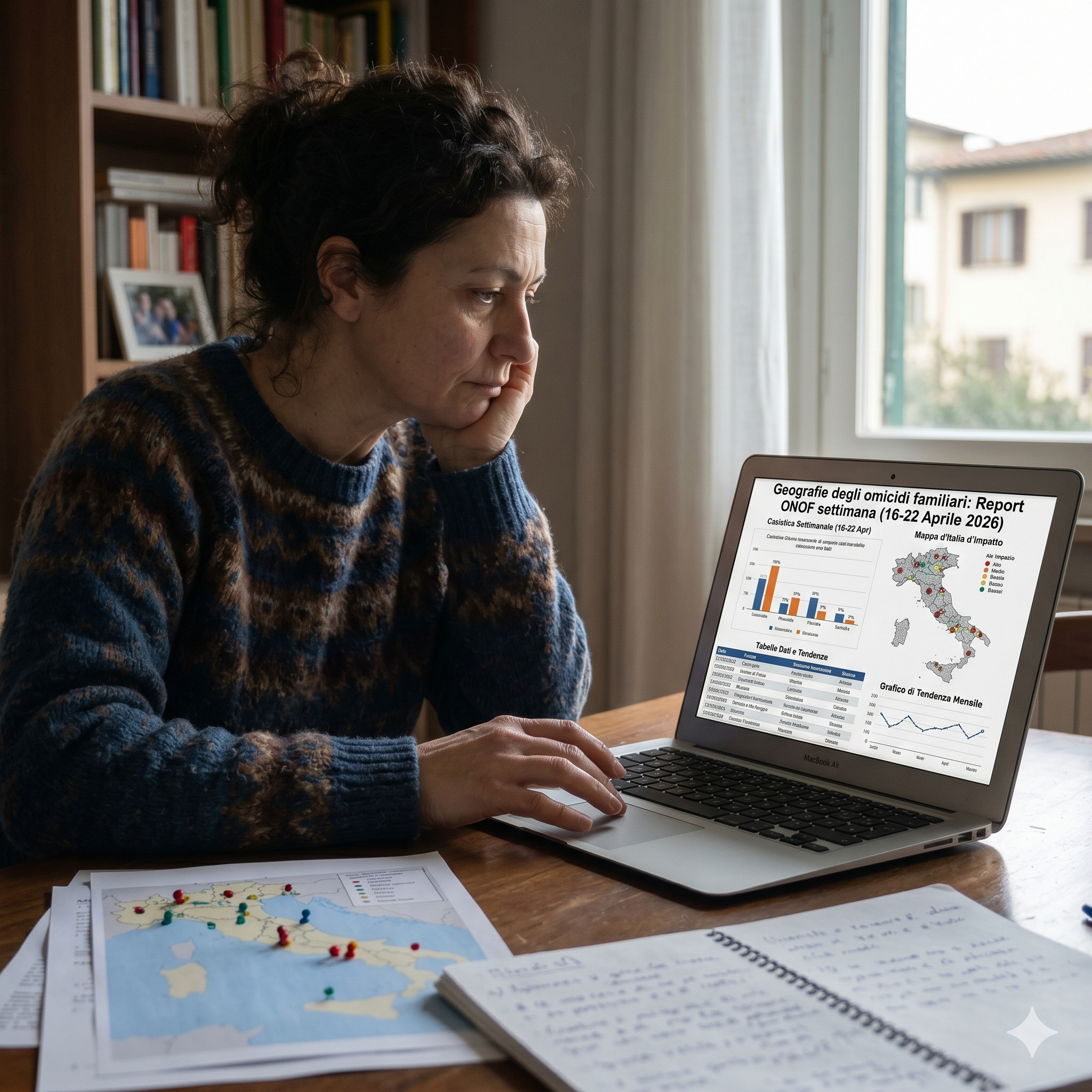
.png "Genere, familiarità e vulnerabilità nei delitti familiari: Report ONOF (23-29 Aprile 2026)")