
The illusion of security in cases of intrafamily homicide
Edited by: Massimo Lattanzi and Tiziana Calzone Institutions: Italian Association of Psychology and Criminology (AIPC), Italian Center of Relational Psychotraumatology (CIPR), National Observatory on Intrafamily Homicide (ONOF).
Abstract
This article explores the complex relationship between the observation of social bonds and individual physiological response, integrating the results of a recent experimental study with the relational psychotraumatology approach. Starting from evidence that the passive viewing of affective interactions between strangers can induce a state of alertness rather than calm, the analysis extends to the degree of familiarity variable documented by ONOF researchers in cases of intrafamily homicide. It highlights how emotional dysregulation and the narrowing of the window of tolerance, typical of individuals with complex trauma (C-PTSD), transform the social bond from a resource into a potential trigger for a "grave acting-out."
The physiological response to social monitoring
The study published in Evolutionary Psychological Science reveals that observing strangers engaged in affective interactions triggers a physiological response of attention or stress. Specifically:
- Reduction in vmHRV: Viewing images of social bonding between strangers causes a reduction in vagally mediated heart rate variability, a metric linked to the "rest and digest" system.
- Absence of Automatic Calm: Contrary to common hypotheses, witnessing positive connections between third parties does not automatically induce a sense of security in the observer.
- Evolutionary Mechanism: The human brain has developed sophisticated monitoring systems to foster stable relationships, but the physiological response is strictly dependent on context and group identification.
Relational trauma and dysregulation: The AIPC and CIPR perspective
According to the scientific-clinical approach of Lattanzi and Calzone (AIPC/CIPR), trauma is not the event itself, but the resulting disorganization of the subjective experience and the nervous system.
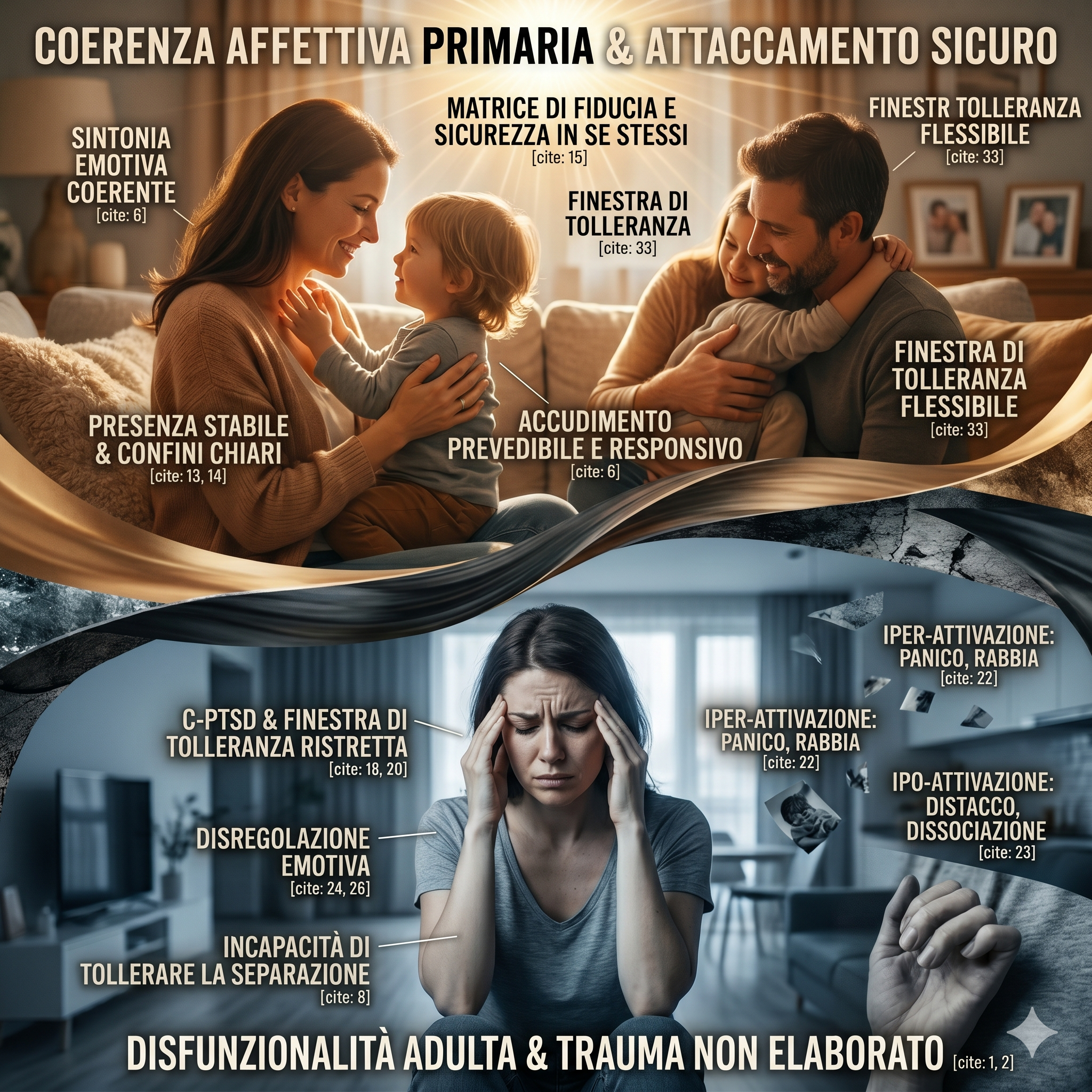
1. Traumatic brain: Relational traumas, especially those involving family or attachment, restructure the functioning of the nervous system, leading to chronic states of hyperarousal (alarm) or dissociation.
2. Window of tolerance: In people with C-PTSD, the window of tolerance is extremely narrow. Stimuli that should be pro-social can be perceived as threatening, causing an exit from the window that results in a loss of impulse control.
3. The "Body Keeps the Score": Traumatic memories are not coherent narratives but sensory fragments and dysregulated autonomic states that influence the response to social bonding.
International Summit: From C-PTSD to Pet Therapy: Integrated paths of emotional regulation in cases of violence.
Rome, February 13, 2026. 3:00 PM – 7:00 PM | SALA TEVERE, Lazio Region – Via C. Colombo, 212 An excellence panel for the assessment of complex trauma and violent relational dynamics.
FREE ENTRY. RESERVATION REQUIRED. CERTIFICATE OF PARTICIPATION WILL BE ISSUED. LIMITED SEATS.
Click on the link for the registration form
Correlation with ONOF data: Familiarity and femminicidio
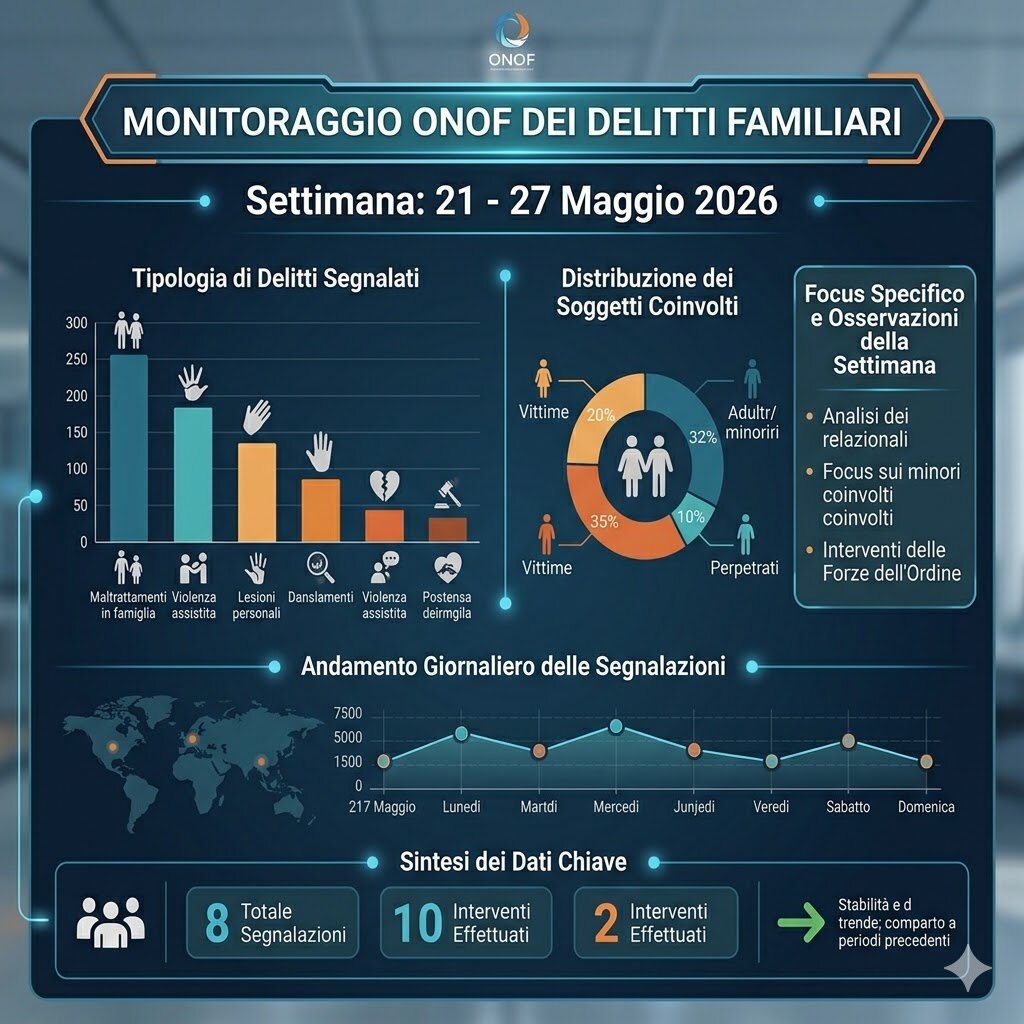
ONOF researchers emphasize the crucial importance of the degree of familiarity in the profiling of homicides.
- Familiarity as a watershed: While experimental studies show that a lack of familiarity between observer and observed inhibits the "vagal brake," ONOF data shows that, in pathological contexts, it is precisely excessive proximity or the breaking of the bond that triggers violence.
- Homicide profile: In intrafamily homicides, the "grave acting-out" is often the result of acute emotional dysregulation where the partner or family member is no longer perceived as a "secure base," but as a source of intolerable threat.
- Femminicidio: In this specific context, the correct word to define the killing of a woman as such is femminicidio, a term that underlies a relational dynamic of power and possession widely documented by AIPC.
Conclusion
The physiological and behavioral importance of the social bond cannot be considered universally positive without assessing the state of the subject's nervous system. As documented by CIPR, ONOF, and AIPC research, the ability to benefit from social bonding depends on proper emotional regulation and a functional window of tolerance. Future research should investigate whether the inclusion of self-assessment questionnaires on feelings of belonging can further explain the vagal withdrawal observed during the viewing of social interactions.
Information and support
AIPC and CIPR offer specialized paths in Pescara and Rome, integrating methodologies such as biofeedback for the treatment of relational trauma.
AIPC Email: aipcitalia@gmail.com
WhatsApp: 3924401930
5X 1000 Tax Code (AIPC): 97238660589
Website: www.associazioneitalianadipsicologiaecriminologia.it
Bibliographic References
1. Araújo, C. R. V., et al. (2026). Passively Viewing Social Bonding Cues Decreases Vagally Mediated Heart Rate Variability. Published in Evolutionary Psychological Science.
2. ONOF / AIPC (2025). Analysis of data on intrafamily homicides and femminicidi: Victim and perpetrator profiling. 2025 Research Reports.
3. Lattanzi, M., CIPR. Relational Psychotraumatology and C-PTSD: Emotional regulation and the window of tolerance in complex trauma. AIPC/CIPR Scientific Archive.
© 2026 AIPC Publisher – All rights reserved. Use, even partial, is prohibited without mandatory citation of the source.
.png "La clinica del passaggio all'atto: Report ONOF dei delitti familiari (14-20 Maggio 2026)")