Relational psychotraumatological and clinical-forensic analysis of the capodimonte event
By: Dr. Massimo Lattanzi and Dr. Tiziana Calzone
Organizations: Italian Association of Psychology and Criminology (AIPC), Italian Center for Relational Psychotraumatology (CIPR), National Observatory on Family Homicides (ONOF).
The episode of violence that occurred in Capodimonte on February 22, 2026, during the Napoli-Atalanta football match, constitutes a case study of exceptional relevance for relational psychotraumatology and modern clinical criminology. A 35-year-old woman allegedly attacked her 40-year-old spouse with sharp weapons, acting under the influence of a distorted perception of threat triggered by the man's shouting at a televised sporting event. The following analysis, conducted through the protocols of the Italian Association of Psychology and Criminology (AIPC) and the Italian Center for Relational Psychotraumatology (CIPR), decodes the event as the final outcome of a complex traumatic dynamic analyzed by doctors Massimo Lattanzi and Tiziana Calzone.
Phenomenology of the event and analysis of precedents
The assault reportedly took place in the couple's home. While the man followed the football match, his excited verbal reaction allegedly triggered a response of destructive fury in his wife. The woman reportedly initially threw scissors at her partner, then attempted to strike him in the side with a kitchen knife. Although the first blow missed, the woman allegedly succeeded in wounding him subsequently. The dynamic of the attack continued even while the bleeding man attempted to alert emergency services (112 and 118): the thirty-five-year-old allegedly continued to hurl other blades at him, one of which became firmly embedded in the house wall.
Although no final criminal convictions emerged prior to the fact, the clinical-forensic analysis reveals indicators of a violent conduct that was not isolated. The woman was indeed arrested not only for aggravated personal injury but also for family maltreatment, a crime that by nature presupposes the repetition of abusive behaviors over time. A crucial element lies in the contents of the woman's bag, where the Carabinieri reportedly found three other blades, including an oyster opener. The habitual carrying of improper weapons suggests the existence of "behavioral precedents" linked to a state of chronic hyper-vigilance and a constant perception of danger—typical signs of those living immersed in what Lattanzi and Calzone define as a "traumatic bubble."
The author's mental state: C-PTSD and emotional dysregulation
The reaction of the woman from Capodimonte could be interpreted through the lens of Complex Post-Traumatic Stress Disorder (C-PTSD). In this framework, the brain architecture undergoes reprogramming that alters emotional management and stress response. For the author, the husband's shouting would not have been processed as signs of sporting frustration, but would have been intercepted by the limbic system as a direct attack on her own safety, triggering a neurophysiological response of extreme attack.
This phenomenon, known as emotional dysregulation, involves the inability to modulate the intensity of affective responses. The specific trigger—profanity over a denied penalty—would have caused an "eclipse of reason," in which the partner ceased to be an affective figure to become a symbolic target of previous traumatic projections. The behavior of continuing to throw knives during the victim's request for help would indicate a complete failure of impulse control and a dramatic exit from phenomenal reality.
Training event: brain awareness week 2026
On the occasion of Brain Awareness Week 2026, AIPC, CIPR, and ONOF present:
Brain Awareness Week 2026: The mind at the center of prevention. Don't miss the free webinar on March 27, 2026, 5:30 PM - 6:30 PM. "UNDERSTANDING THE MIND TO PREVENT VIOLENCE." We will explore clinical tools to recognize and prevent violence through emotional regulation. Click the link to participate: [Link]
The window of tolerance and the partner paradox
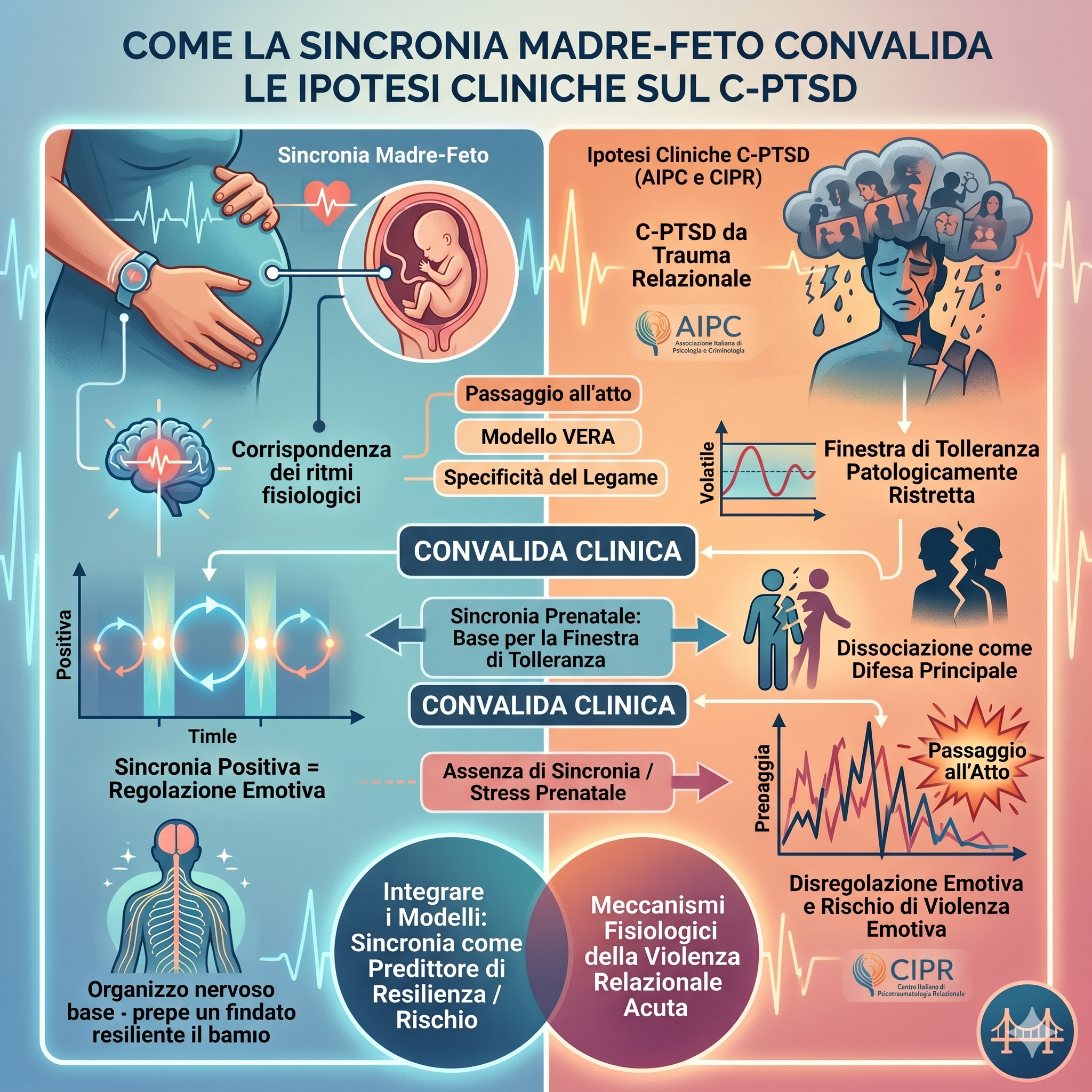
The "window of tolerance" model explains how every individual has a range of activation within which they can function optimally. In people with C-PTSD, this window is extremely narrow: minimal stimuli can push the subject into a state of hyper-arousal, characterized by explosive anger and impulsivity, as observed in the Capodimonte stabbing.
In this context, the "partner paradox" enters: the loved one, who should represent a safe haven, is simultaneously experienced as a source of archaic threat. This neurobiological short circuit prevents the emotional negotiation of conflict and leads to the use of improper weapons, indicative of an unplanned acting out (crime of passion) in which the defense system reacts catastrophically to a perceived threat.
ONOF profiles analysis: the "blood parity" of february 2026
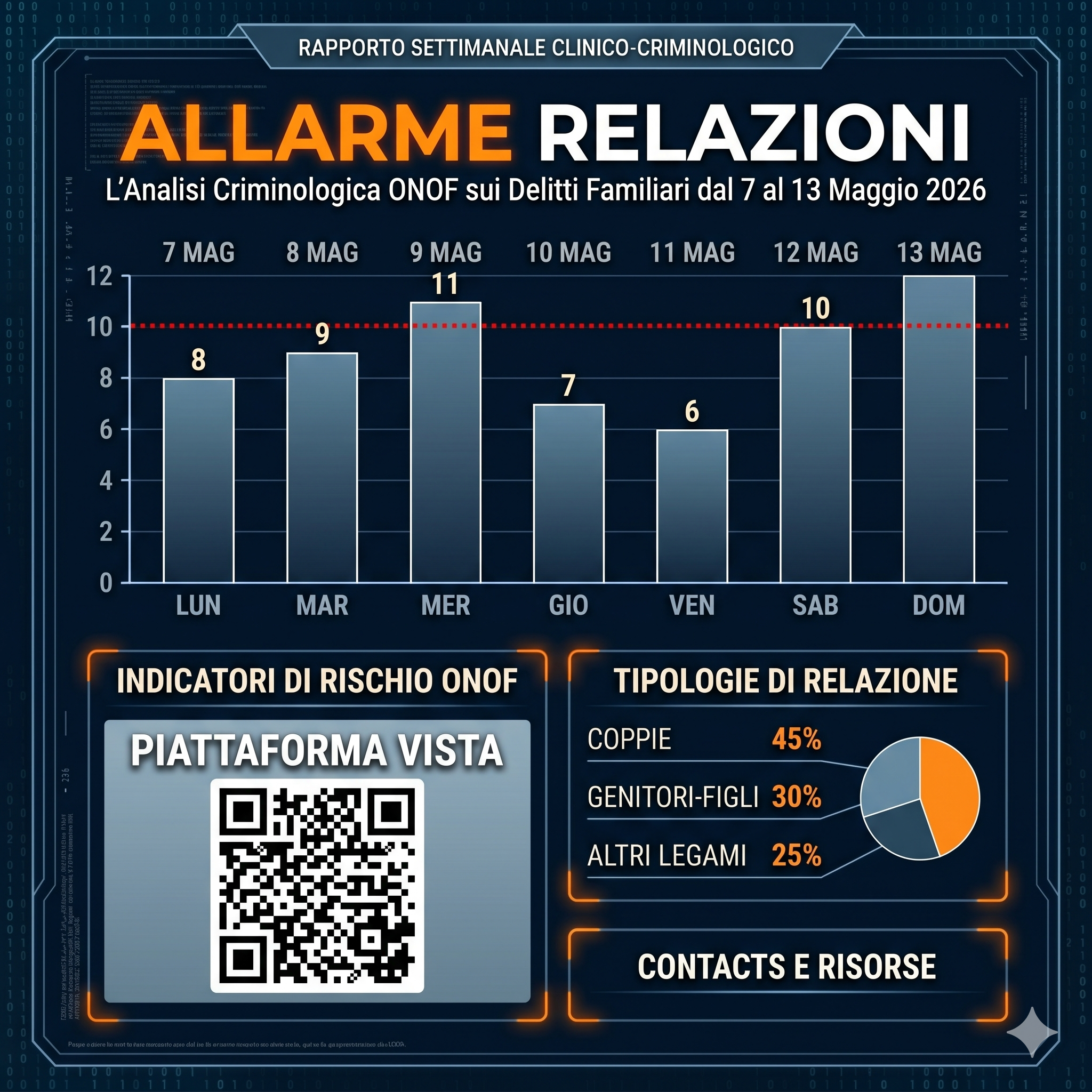
The Capodimonte event occurs in a period of particular statistical complexity monitored by the National Observatory on Family Homicides (ONOF). In the report relating to the week of February 12 to 18, 2026, data showed a surprising "blood parity," with family homicide victims divided equally between 50% men and 50% women.
The analysis of that specific week outlined very divergent profiles between genders. Female victims (50% of the total) were predominantly elderly women (over 72 years old), struck in Northern Italy at the hands of relatives. Conversely, male victims (the remaining 50%) belonged to a younger age group, between 36 and 53 years old, were killed mainly in Central Italy, and the author was often an acquaintance, with a prevalent use of sharp weapons.
The V.E.R.A. protocol and scientific prevention
To prevent lethal escalations, AIPC promotes the V.E.R.A. (Violence Emotional Risk Assessment) protocol, a tool that moves away from purely social evaluations to adopt a clinical and neuroscientific key. The protocol works through three fundamental steps. Initially, the subject's emotional risk and the presence of unresolved traumas are assessed; subsequently, the window of tolerance is monitored through physiological parameters such as heart rate variability (HRV) and galvanic skin response (GSR) to objectively measure dysregulation. Finally, the goal is to decode warning signals before the "acting out" occurs. The protocol thus acts as a watershed between the condemnation to repeat the trauma and the possibility of a healing of the Self.
You can concretely contribute to our work:
5x1000: C.F. 97238660589
Donations: IBAN AIPC IT83I0760103200000056039688
Together, we can transform silent suffering into a path of healing, so that the "window of tolerance" becomes a space for life and not the limit beyond which tragedy unfolds.
For information and appointments:
Website: www.associazioneitalianadipsicologiaecriminologia.it
Email: aipcitalia@gmail.com
WhatsApp: 3924401930
Impact on the minor daughter and witnessed trauma
A tragic aspect of the Capodimonte event is the presence of the couple's daughter, a witness to the assault. Witnessed violence constitutes psychological abuse with dramatic consequences for the minor's development, exposing them to the "caregiver paradox": the nurturing figure coincides with the source of fear.
Long-term consequences for minors witnessing such episodes include the development of childhood C-PTSD, emotional regulation deficits, and the internalization of relational models based on force or helplessness. According to AIPC data, over 80% of people involved in violent dynamics (victims, authors, or witnesses) present a history of untreated relational trauma, confirming how violence is often a tragic narrative of wounds passed down through generations if not interrupted by specialized interventions.
Conclusion
In conclusion, the Capodimonte case highlights the need to move beyond mere punishment to integrate paths of emotional stabilization and rehabilitation, shifting the focus from anger to the analysis of trauma to finally break the cycle of family violence.
© 2026 AIPC Editore – All rights reserved. Use, even partial, is prohibited without mandatory citation of the source for any modality. Violations will be prosecuted according to the law.
.png "La clinica del passaggio all'atto: Report ONOF dei delitti familiari (14-20 Maggio 2026)")