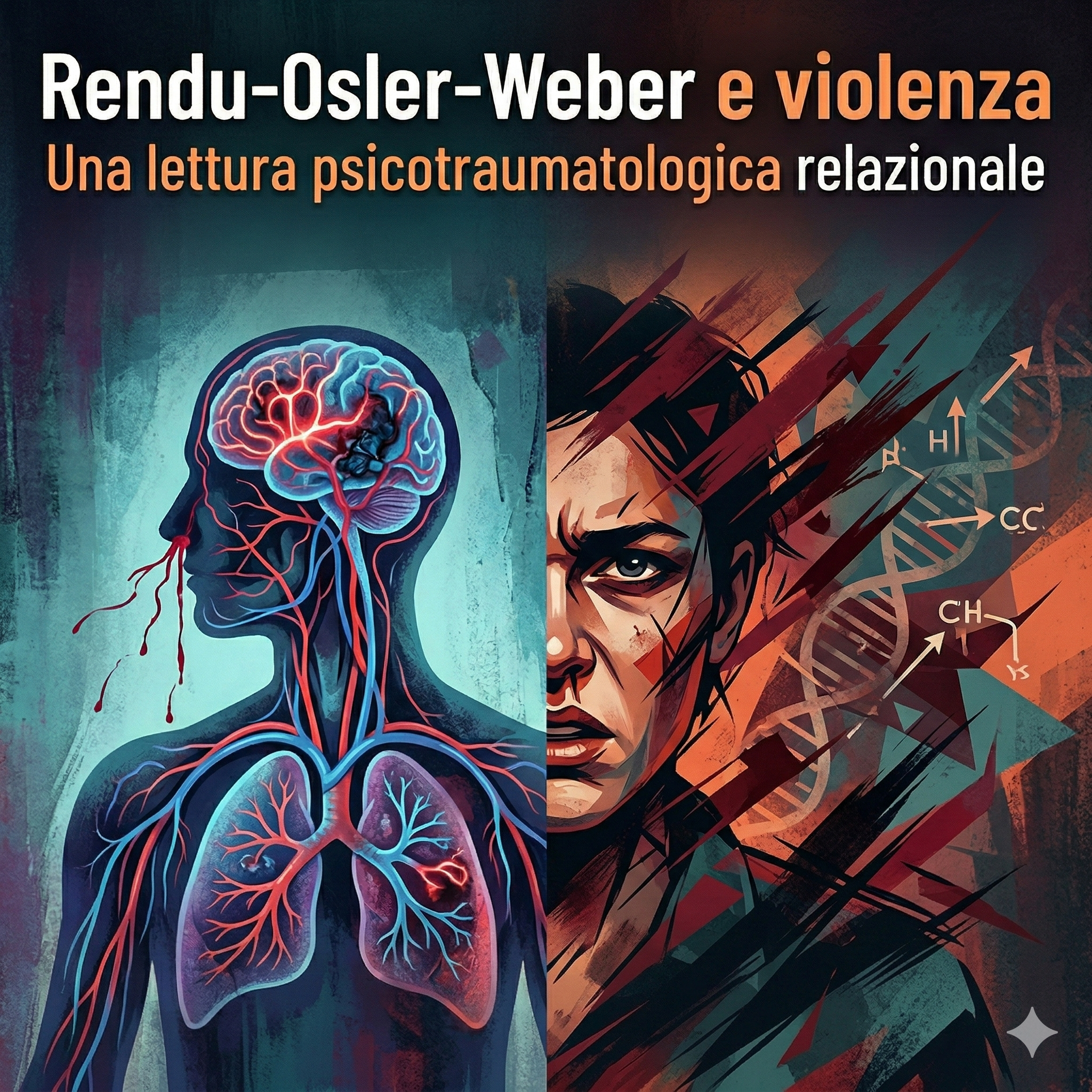
Rendu-Osler-Weber and violence: A relational psychotraumatological interpretation.
Between genetics, epigenetics, and emotional dysregulation
Edited by: Dr. Massimo Lattanzi and Dr. Tiziana Calzone Organizations: Italian Association of Psychology and Criminology (AIPC), Italian Center for Relational Psychotraumatology (CIPR), National Observatory on Family Homicides (ONOF).
Introduction
On the occasion of Rare Disease Day, AIPC, ONOF, and CIPR present this scientific contribution to shed light on Rendu-Osler-Weber Syndrome. The objective is to explore the unprecedented connection between organic pathology and relational psychotraumatology, offering new interpretations of emotional dysregulation and violence prevention.
Abstract
This contribution analyzes Rendu-Osler-Weber Syndrome (HHT) not only as a hematological and vascular pathology but as a potential study model for emotional dysregulation and C-PTSD. Through the lens of relational psychotraumatology, it is hypothesized that impaired oxygenation due to AVMs (Arteriovenous Malformations) and the mixing of "good blood" (oxygenated) and "bad blood" (laden with waste) analogically reflect the narrowing of the window of tolerance. The article explores the correlation between biological hyperactivation, impulse control deficits, and dysfunctional "self-care" mechanisms (such as epistaxis and addictions), framing them within a context of intergenerational and epigenetic transmission of trauma.
The dynamics of AVMs: A metaphor for "dirty" blood
In Rendu-Osler syndrome, the formation of Arteriovenous Malformations (AVMs), particularly at the cerebral and pulmonary levels, creates a hemodynamic short circuit: a vein connects directly into an artery (or vice versa), causing a mixture that prevents the correct filtering of gases and nutrients. The blood becomes "dirty": what should be oxygenated becomes laden with waste.
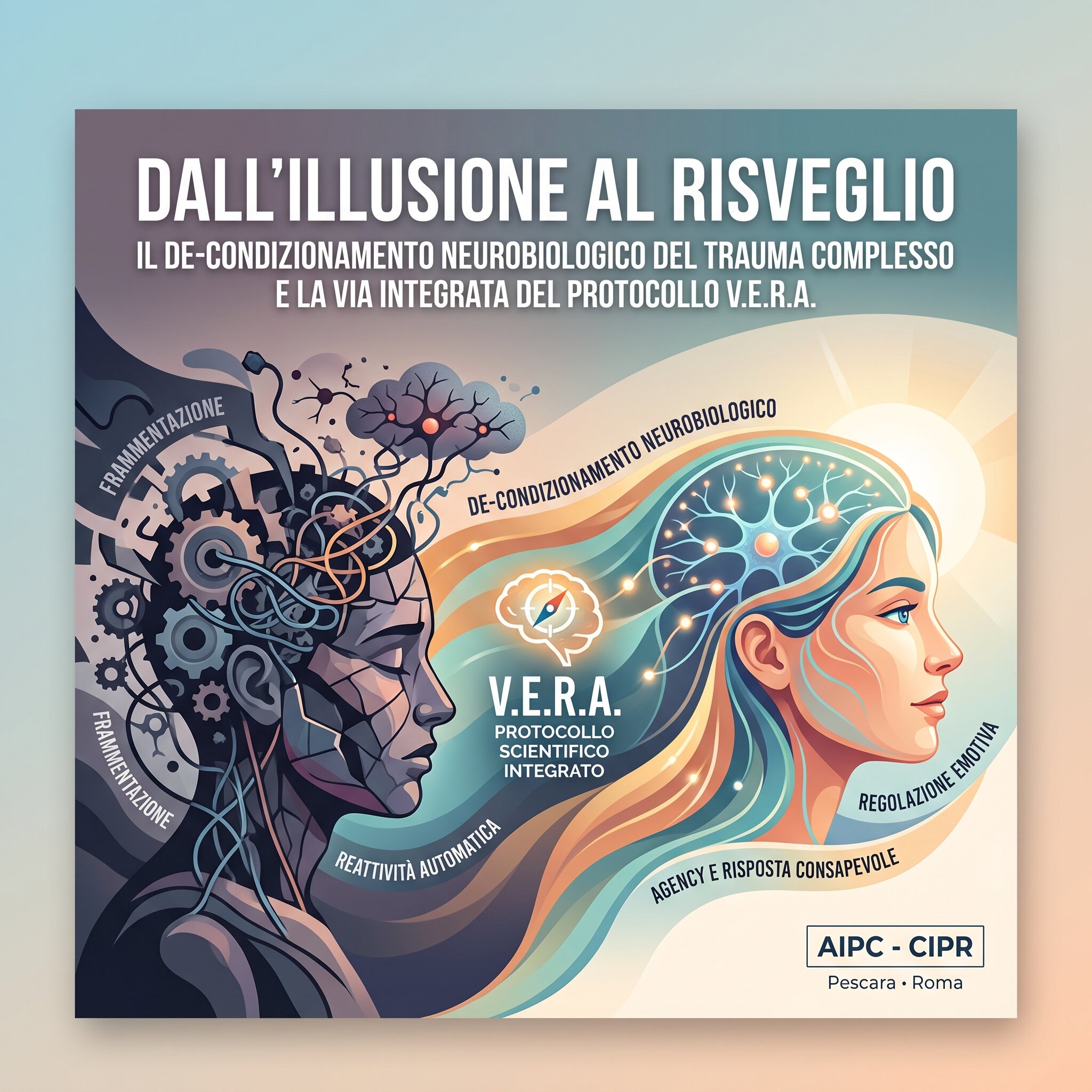
From a neurophysiological perspective, this lack of "good blood" can be read as a metaphor for the reduction of the window of tolerance. In individuals suffering from C-PTSD (Complex Post-Traumatic Stress Disorder), the ability to integrate stimuli is compromised. When "bad blood" (emotional waste, unprocessed trauma) overwhelms cognitive oxygenation, the central nervous system enters a state of constant hyperactivation.
The severe acting out, understood as a loss of impulse control, occurs precisely when the individual exits their window of tolerance—which, in traumatized people, is extremely narrow. Violence thus becomes the manifestation of an "intoxicated" system that can no longer correctly process reality.
Training event: Brain Awareness Week 2026
In occasion of Brain Awareness Week 2026, AIPC, CIPR, and ONOF present:
Brain Awareness Week 2026: The mind at the center of prevention. Don't miss the free webinar on March 27, 2026, 5:30 PM – 6:30 PM. "UNDERSTANDING THE MIND TO PREVENT VIOLENCE." We will explore clinical tools to recognize and prevent violence through emotional regulation.
Click the link to participate: https://www.settimanadelcervello.it/event/comprendere-la-mente-per-prevenire-la-violenza/
Epistaxis and addictions: "self-care" mechanisms
A characteristic element of Rendu-Osler is recurrent nasal epistaxis (nosebleeds). From a psychotraumatological viewpoint, these hemorrhages can be interpreted as an archaic attempt by the body to "discharge" unsustainable internal pressure.
There is a profound analogy with C-PTSD symptoms: just as the traumatized individual resorts to addictions or hyperactivation to anesthetize intolerable pain, epistaxis represents a sort of physical "relief valve" for toxic saturation. It is a form of dysfunctional self-care: the body expels the superfluous to avoid systemic collapse, just as the traumatized mind seeks relief in impulsive behaviors to avoid sinking into dissociative emptiness or identity fragmentation.
The transmission of vulnerability: between genetics and epigenetics
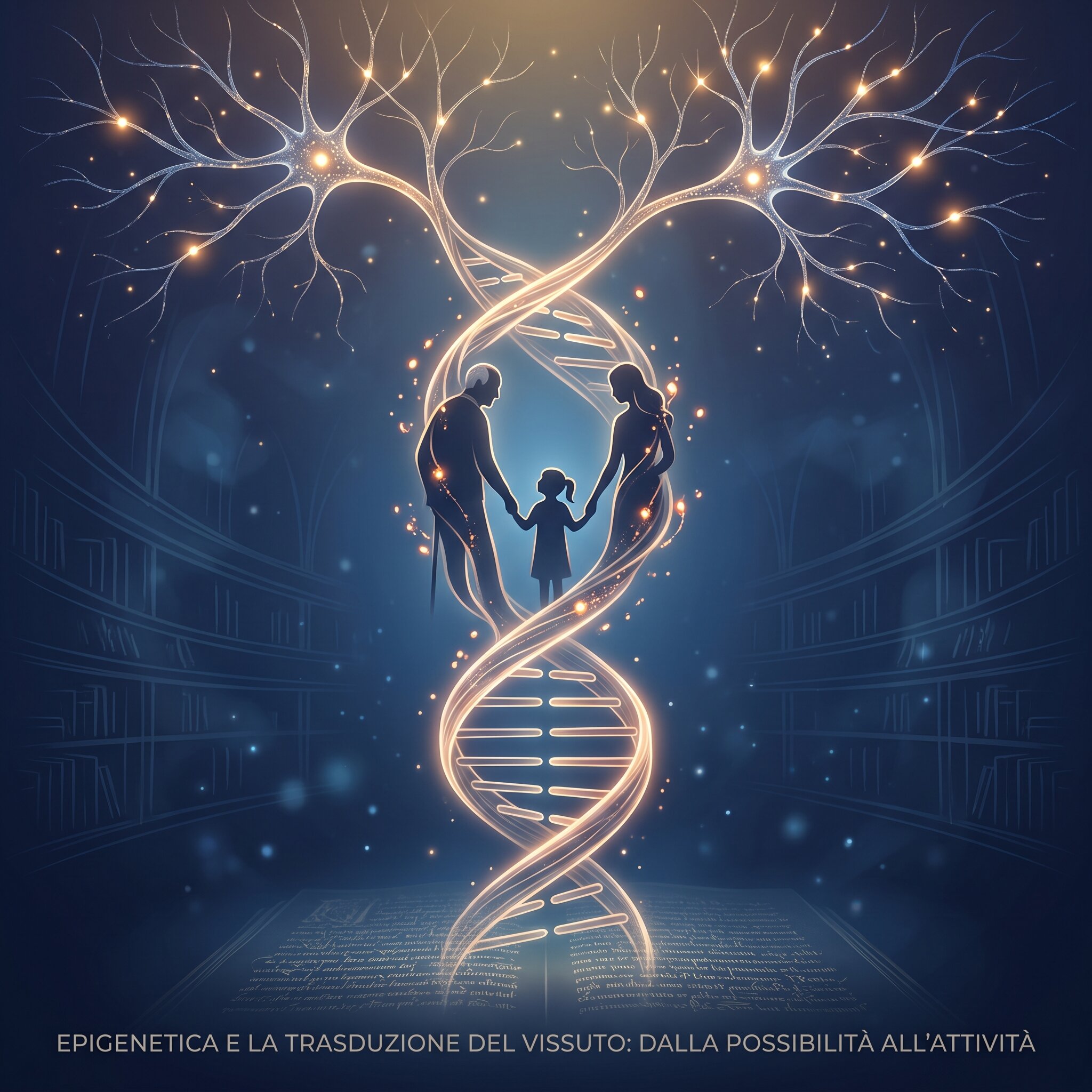
Moving beyond the rigid distinction between body and psyche, it is fundamental to understand how suffering is handed down through generations. Research by Lattanzi and Calzone on Hereditary Hemorrhagic Telangiectasia emphasizes the genetic nature of the pathology (mutations in ENG or ACVRL1 genes).
However, epigenetics intervenes, modulating the expression of that genetic heritage based on the relational environment. A context characterized by unprocessed trauma or violence acts as a catalyst, making the individual biologically and psychologically more vulnerable. While genetics draws the tracks of physical pathology, epigenetics and relational trauma define the subject's ability to regulate their emotions. "Dirty blood" is not just a hematological data point, but a legacy of traumatic experiences that, if not processed through clinical intervention, crystallize into violent behavior.
Conclusion: towards a new relational awareness
On this International Rare Disease Day, we must state forcefully that the "dirty blood" of Rendu-Osler must not become the inevitable destiny of a life dominated by violence or isolation. The real challenge is not only to stem the physical hemorrhage but to decontaminate the relational ground in which the person grows and breathes. Healing is possible only when we transform acting out into awareness, and dysregulation into guided regulation. Supporting psychotraumatological research and intervention means giving oxygen to those who have been suffocated by traumatic waste too heavy to carry alone. Breaking the chain of intergenerational transmission of pain is an act of civilization and love toward the future.
How to support research and receive support
Contribute to Change: You can support our research projects on violence prevention and relational trauma support:
- 5x1000: C.F. 97238660589
- Donations: IBAN AIPC IT83I0760103200000056039688
Contacts and specialist support: If you feel that complex family dynamics or chronic pathologies have deeply influenced your life and your emotional regulation, you are not alone. The CIPR offers a specialized approach to addressing relational trauma.
- Website: www.associazioneitalianadipsicologiaecriminologia.it
- Email AIPC/CIPR: aipcitalia@gmail.com
- WhatsApp: 3924401930 (Service active every day from 11:00 AM to 4:00 PM)