Phenomenological analysis of relational homicides: beyond social narrative
Technical-scientific reflections on the prevention of family homicides and relational trauma. 2025 data analysis.
Providing and research institutions:
- AIPC (Italian Association of Psychology and Criminology)
- CIPR (Italian Center for Relational Psychotraumatology)
- ONOF (National Observatory on Family Homicides)
Abstract
This contribution analyzes the phenomenon of family homicides and femicide through the lens of relational psychotraumatology, moving away from purely socio-cultural media narratives. By integrating 2025 statistical data with clinical models of emotional dysregulation and C-PTSD, this document highlights the need for technical prevention based on the VERA-2R protocol. Critical emphasis is placed on the role of primary networks—often passive spectators of the escalation who transform into active "testimonials" only after the tragic event. It underscores that the true protection of victims lies in the early interception of trauma, rather than its posthumous sensationalism.
Regarding the public debate sparked by recent media testimonies on femicide, AIPC and CIPR consider it essential to supplement the social narrative with scientific evidence derived from relational psychotraumatology and criminological profiling.
1. The complexity of 2025 data: beyond gender
A technical distinction must be made between the phenomenon of femicide and the broader spectrum of family homicides. Statistical analyses conducted in 2025 reveal differentiated patterns that cannot be ignored:
- Female victims: Proportionally, women are victims of a person with whom they have or have had an affective-sentimental relationship (femicide).
- Male victims: Proportionally, men are the prevalent victims of family homicides committed by relatives or acquaintances.
Effective prevention cannot ignore the variable of the degree of familiarity that characterizes the act, regardless of the victim's gender.
2. From silence to testimonial: the role of primary networks
A decisive and often overlooked element in the escalation of violence is the role played by bystanders, family members, and friends.
- The decisive omission: Too often, these figures play a passive role during the latency phase of violence, ignoring or minimizing signs of the perpetrator’s emotional dysregulation.
- Post-Acting transformation: It is paradoxical to note how, only after a grave and high-profile act, these same figures undergo a metamorphosis, transforming from passive (and sometimes omissive) witnesses into "active testimonials" or social spokespersons. While driven by grief, this transition does not replace the need for early preventive intervention that these very networks could have stimulated.
3. Risk Assessment: The VERA-2R Protocol
Prevention is not achieved through posthumous narratives, but through Structured Professional Judgment (SPJ) and tools such as VERA-2R (Violence Emotional Risk Assessment). These protocols allow for the analysis of dynamic predictive factors and relational vulnerability, moving beyond ideological simplification.
4. The clinical nature of "Acting Out"
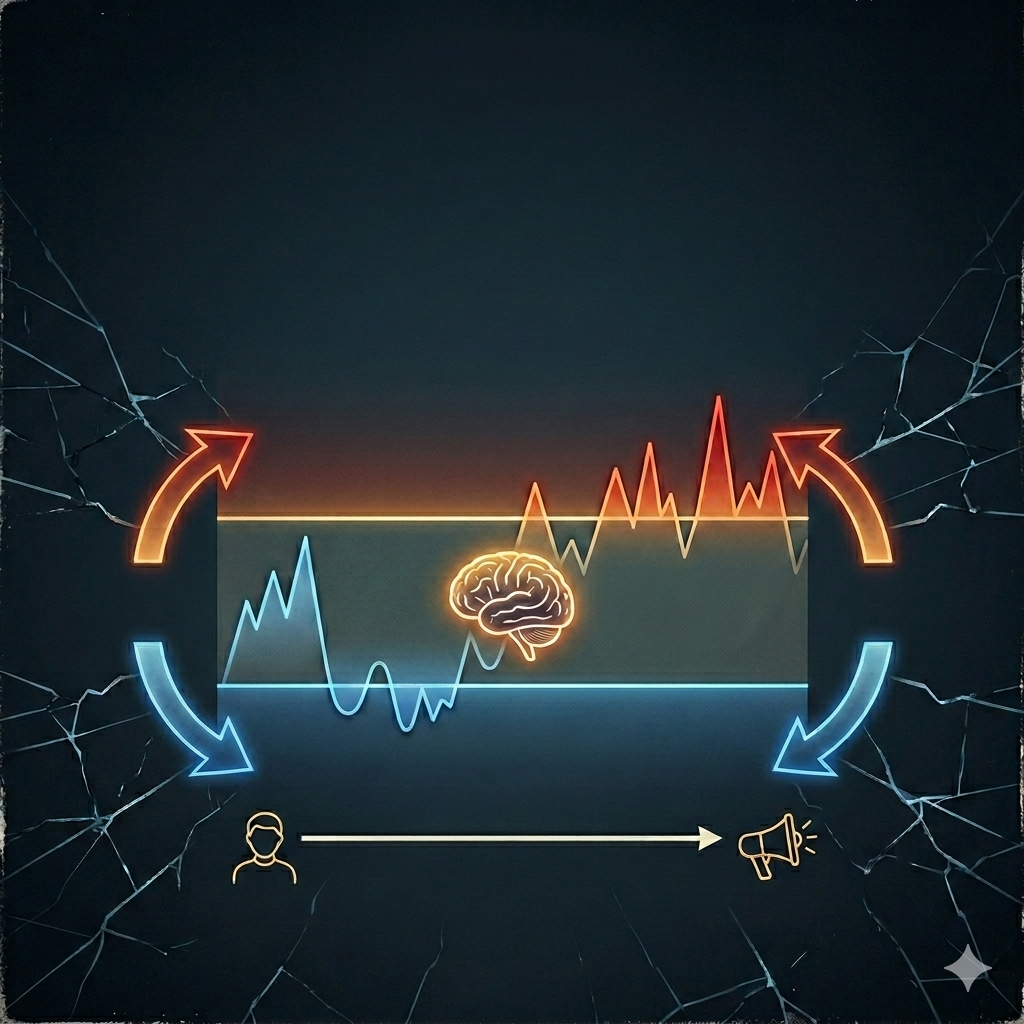
Homicide within a family context is the outcome of severe emotional dysregulation. In individuals with C-PTSD (Complex Post-Traumatic Stress Disorder), the window of tolerance is extremely narrow. The "acting out" (passage to the act) occurs when the nervous system exits this window, leading to a loss of impulse control. Effective prevention must therefore involve treating traumas rooted in primary relationships.
Conclusion: prevention beyond memory
The prevention of family homicides cannot continue to be an exercise in post-event commemoration. To truly honor the victims, we must have the courage to view violence as a failure of emotional regulation and a blindness of primary networks. Being a "testimonial" of pain after a tragedy is a human reaction, but being an "active witness" of prevention before the act is a civil and clinical duty.
Science provides us with the tools—from the VERA-2R protocol to biofeedback—to intervene in the "shadow zone" of familiarity; ignoring them in favor of oversimplified slogans condemns more lives to the same inevitable repetition. Change is not born on a stage, but from the clinical capacity to widen the window of tolerance for those who suffer and the responsibility of those who watch.
Support and Research: Prevention requires specialized clinical paths and the integration of advanced methodologies like biofeedback.
Technical Contacts:
- Email: aipcitalia@gmail.com
- Website: www.associazioneitalianadipsicologiaecriminologia.it
- WhatsApp: 3924401930 (Active 11:00 – 16:00)
- AIPC Tax Code (CF): 97238660589